

A skills gap is one of the biggest workforce challenges facing organizations today. As technology evolves and business needs change, many companies struggle to ensure their employees have the skills required to succeed in current and future roles.
As workforce demands continue to evolve, workforce development has become a strategic priority for organizations worldwide. To remain competitive, businesses must identify skill gaps early and invest in targeted development initiatives.
In this article, we'll explore what a skills gap is, its causes and impact, how organizations can identify skill gaps, and the strategies they can use to build a future-ready workforce.
Skills Gap Statistics
The skills gap continues to widen as organizations struggle to keep pace with technological advancements and changing workforce demands. According to the World Economic Forum's Future of Jobs Report 2025, 39% of workers' core skills are expected to change by 2030, highlighting the need for continuous workforce development.
The report also found that 63% of employers identify skills gaps as the biggest barrier to business transformation. As organizations adopt AI, automation, and other emerging technologies, demand for new capabilities continues to outpace supply.
This challenge is reflected in employer hiring trends. According to ManpowerGroup's Global Talent Shortage Survey 2026, 72% of employers report difficulty finding skilled talent, demonstrating the growing disconnect between workforce capabilities and business needs.
To remain competitive, organizations are increasingly investing in skills intelligence, workforce planning, upskilling, and reskilling initiatives to identify capability gaps and prepare employees for future roles.
What Is a Skills Gap?
A skills gap is the difference between the skills an organization needs to achieve its business goals and the skills its workforce currently possesses. These gaps can exist in technical skills, industry-specific expertise, or essential soft skills such as communication, leadership, and problem-solving.
As technology advances and job requirements evolve, many organizations struggle to keep pace with changing skill demands. Without a clear understanding of workforce capabilities, businesses may face challenges in hiring, workforce planning, internal mobility, and employee development.
Identifying and addressing skills gaps helps organizations make informed talent decisions, improve workforce readiness, and build a more agile and future-ready workforce.
Impact of the Skills Gap
The consequences of a skills gap extend beyond hiring challenges. They influence daily operations, strategic growth, and employee experience. Understanding these impacts is key to prioritizing the right interventions.
On Employees
The skills gap can lead to job dissatisfaction, stalled career growth, and increased stress. When employees lack the tools or training to meet evolving expectations, their engagement drops, and confidence erodes. This disconnect also limits their ability to transition into higher-value roles or take on more strategic responsibilities.
On Businesses
For organizations, the consequences of skill issue are far-reaching. Productivity declines, project timelines extend, and recruitment costs rise as companies struggle to find qualified candidates. A persistent gap in critical skills can also undermine innovation, reduce service quality, and slow time-to-market.
On Talent Strategy
Lack of visibility into workforce capabilities makes it difficult to plan for succession, implement effective training programs, or align talent development with business goals. This misalignment can ultimately impact competitiveness, employee retention, and long-term performance.
Causes of Skills Gap
To close the skills gap, businesses must first understand what causes it. From rapid technological change to internal blind spots, several factors contribute to the growing disconnect between what companies need and what their workforce can deliver.
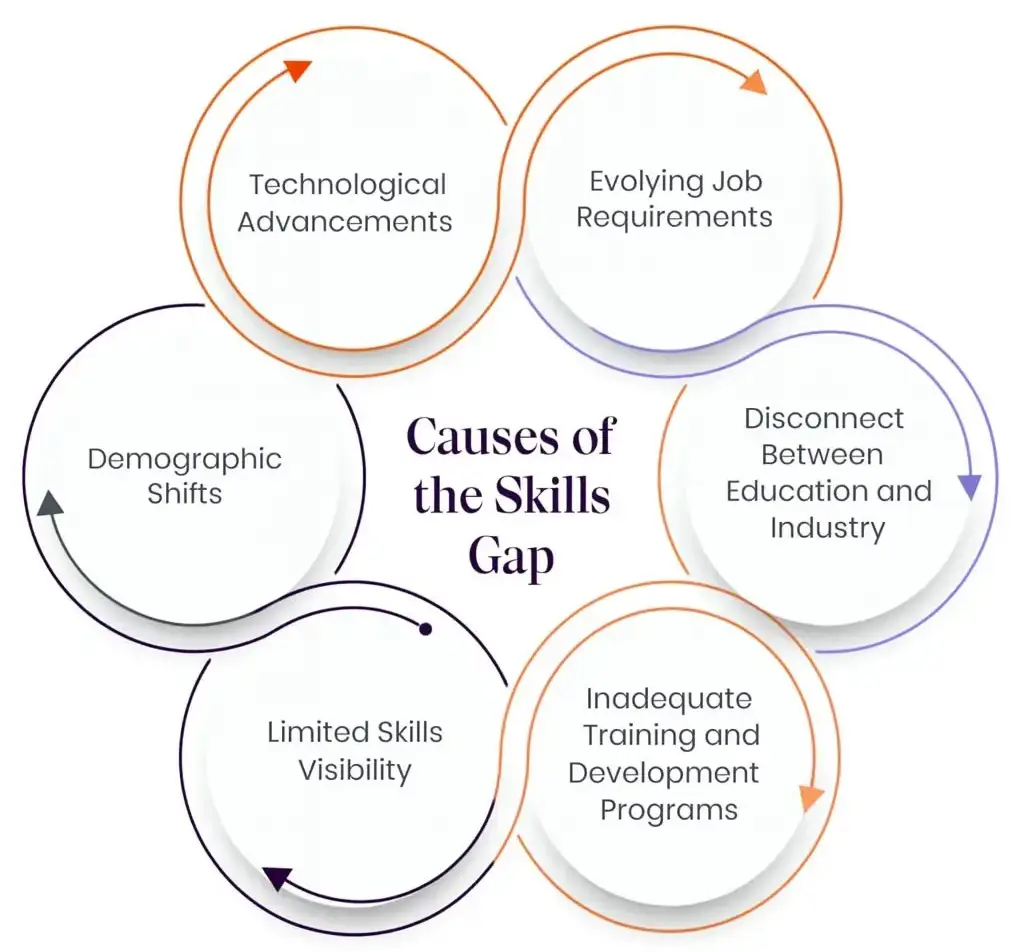
Technological advancements
Rapid innovation in areas like AI, automation, and cloud computing is continuously changing job requirements. As new technologies emerge, older skills become obsolete, creating a widening gap between workforce capabilities and business needs.
The growing AI skills gap further highlights the need for organizations to build both technical AI capabilities and broader AI literacy.
Evolving Job Requirements
Modern roles are increasingly hybrid, requiring a mix of technical, analytical, and soft skills. Traditional job descriptions no longer reflect the reality of what roles demand, and organizations often struggle to keep learning initiatives aligned with shifting expectations.
Disconnect Between Education and Industry
Academic institutions often lag behind current industry standards. Graduates may enter the workforce with theoretical knowledge but lack practical, job-ready skills, leading to a mismatch between supply and demand.
Inadequate Training and Development Programs
Many companies invest in training without a clear strategy. Generic or outdated content, lack of personalization, and poor follow-up assessments lead to low engagement and limited skill transfer to real work scenarios.
Limited Skills Visibility
Without a centralized view of workforce capabilities, organizations often rely on assumptions rather than data when making talent decisions. This lack of visibility can lead to ineffective training investments, slower workforce planning, and missed opportunities for internal mobility.
Demographic Shifts
Retirements and generational transitions affect the skill mix within organizations. As experienced workers exit and younger employees enter with different competencies, gaps in institutional knowledge and leadership readiness can emerge.
Skills Gap Examples Across Industries
Skills gaps vary across industries, but the underlying challenge remains the same: workforce capabilities are not evolving as quickly as business needs.
Technology
As organizations adopt artificial intelligence, cloud computing, and cybersecurity solutions, demand for specialized technical skills continues to grow. Many companies struggle to find professionals with expertise in AI, machine learning, cloud platforms, and data analytics.
Healthcare
The healthcare sector faces growing demand for digital health competencies, including electronic health records (EHR) management, telehealth technologies, and healthcare data analytics. Rapid technological advancements often outpace workforce training and development.
Manufacturing
The rise of automation, robotics, and Industry 4.0 technologies has increased demand for employees who can operate, maintain, and optimize advanced manufacturing systems. However, many organizations face shortages of workers with these technical capabilities.
Financial Services
Financial institutions increasingly rely on data-driven decision-making, automation, and regulatory technologies. As a result, there is growing demand for skills in data analytics, cybersecurity, risk management, and digital transformation.
Retail
Modern retailers require employees with expertise in e-commerce, customer analytics, digital marketing, and AI-powered customer engagement. The shift toward omnichannel experiences has created new skill requirements that many organizations are still working to address.
These examples highlight why organizations must continuously assess workforce capabilities, identify emerging skill requirements, and invest in targeted upskilling and reskilling initiatives to remain competitive.
How to Identify Skills Gap?
Identifying a skills gap is the first step toward building a future-ready workforce. Organizations must understand the skills employees currently possess and compare them against the capabilities required to achieve business goals and support future growth.
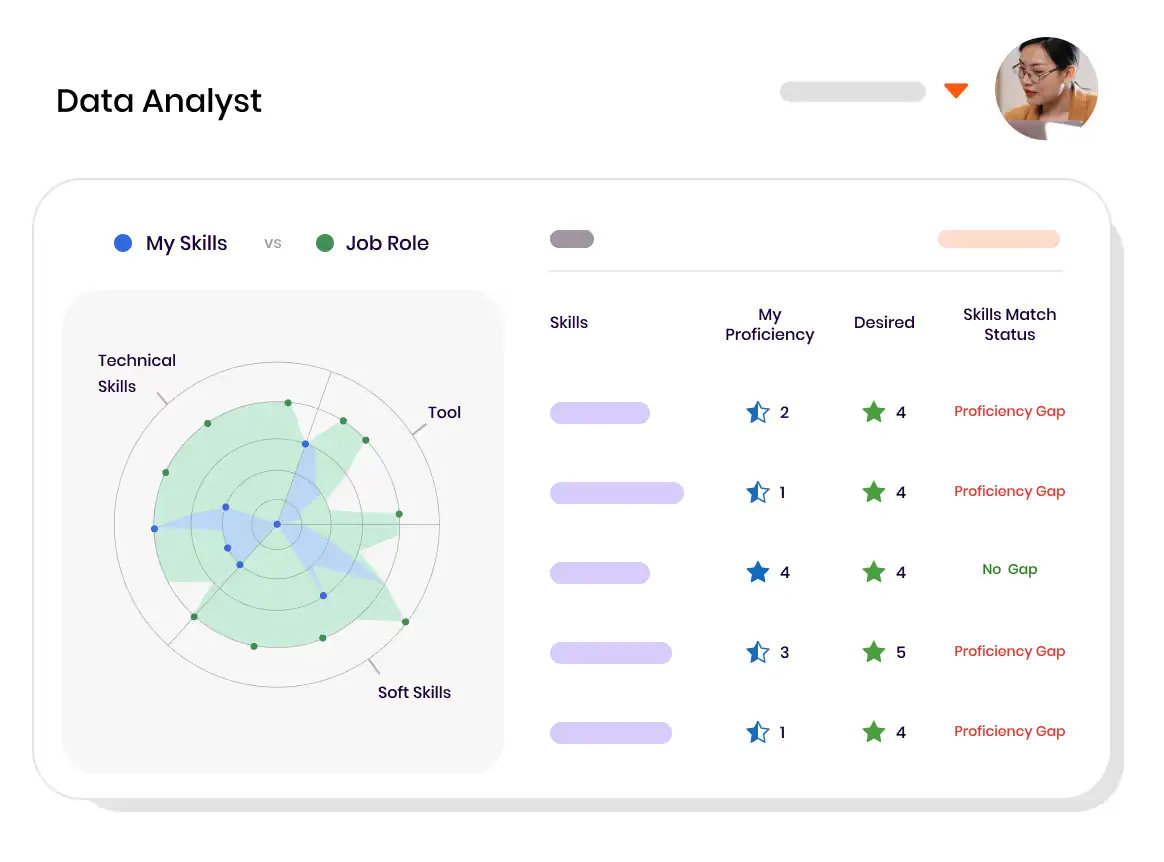
Key steps include:
- Assess current employee capabilities through surveys, skills assessments, or employee evaluations.
- Compare against role requirements using job descriptions, performance benchmarks, and industry standards.
- Leverage data-driven tools to track skills across the organization and highlight shortages or redundancies.
- Validate findings with managers and employees to uncover hidden gaps, particularly in soft skills or leadership potential.
By following these steps, organizations can carry out a structured skills gap analysis that ensures training investments, hiring strategies, and workforce planning directly address the most critical needs.
Addressing Skills Gaps
Bridging the skills gap requires a coordinated strategy across leadership, workforce planning, development, and internal mobility. The following key focus areas help organizations close critical gaps with clarity and structure.
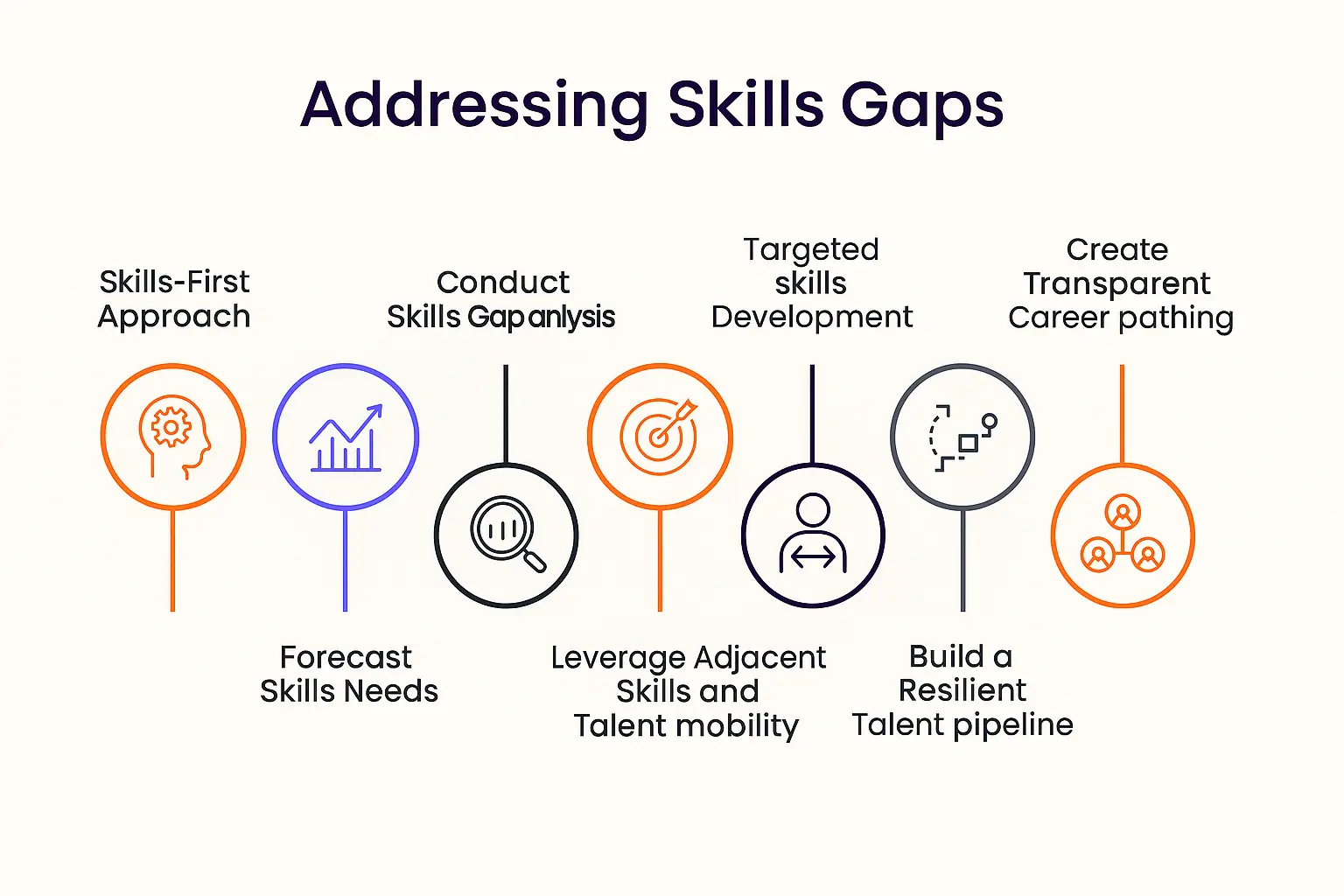
Skills-First Approach
A skills-first approach puts capabilities at the center of workforce planning. Leaders must align talent strategies with business goals and invest in platforms like iMocha’s Skills Intelligence Cloud to gain real-time insights. This shift supports better hiring, targeted development, and stronger business alignment.
Forecast Skills Needs
Accurately forecasting future skill requirements is essential for long-term planning. By analyzing workforce data and business trends, organizations can anticipate changing demands. Skills intelligence platforms provide the visibility needed to make informed decisions.
Conduct Skills Gap Analysis
AI Skill gap analysis compares current employee capabilities with the skills required for success in specific roles. Using iMocha’s role-based assessments, organizations can identify performance risks, guide training investments, and make smarter hiring decisions. A structured analysis enables smarter resource allocation.
Boost performance and innovation! Unleash the power of skills gap analysis tools to optimize your workforce and achieve organizational goals.
Targeted Skills Development
Training programs should be designed to close specific gaps and deliver measurable outcomes. With iMocha’s upskilling and reskilling solutions, supported by pre- and post-training assessments, organizations can track progress, align learning with role-specific needs, and improve overall effectiveness. Flexible formats such as microlearning further enhance engagement and knowledge retention.
Leverage Adjacent Skills and Talent Mobility
Adjacent skills offer a faster path to fill emerging roles. By identifying related competencies, organizations can upskill internally and reduce time-to-hire. Internal mobility also boosts engagement and strengthens workforce adaptability.
Create Transparent Career Pathing
Clear career paths improve employee retention and support long-term growth. When employees see how they can progress, they’re more likely to invest in learning. Career pathing also supports succession planning and leadership development.
Build a Resilient Talent Pipeline
A resilient pipeline combines external hiring with internal talent development. Hiring for potential and learning agility prepares the workforce for future needs. This approach helps reduce talent shortages and improves long-term workforce readiness.
Future Skills Gaps Organizations Should Prepare For
As technology continues to reshape the workplace, organizations must anticipate future skill requirements rather than react to talent shortages after they emerge. The rapid adoption of AI, automation, and digital technologies is increasing demand for skills that were once considered niche.
Some of the most in-demand skills expected to shape the future workforce include:
- AI literacy to effectively use and collaborate with AI-powered tools.
- Data analytics to turn business data into actionable insights.
- Cybersecurity to protect organizations from growing digital threats.
- Cloud computing to support modern IT infrastructure and digital transformation.
- Leadership skills to manage change and guide increasingly distributed teams.
- Adaptability to help employees thrive in rapidly evolving work environments.
Organizations that proactively identify these emerging skill gaps and invest in targeted upskilling initiatives will be better positioned to remain competitive and future-ready.
Conclusion
The skills gap has become a critical workforce challenge as technological advancements, evolving job requirements, and changing business priorities reshape the world of work. Organizations that fail to address skill shortages risk reduced productivity, slower innovation, and difficulties adapting to future market demands.
Closing the skills gap requires more than hiring new talent. Businesses must adopt a proactive approach that includes assessing workforce capabilities, investing in targeted upskilling and reskilling initiatives, and creating opportunities for internal mobility and career growth. By developing a skills-first strategy and continuously aligning workforce capabilities with business objectives, organizations can build a more agile, resilient, and future-ready workforce.
FAQs
What are the types of skills gaps?
The main types of skills gaps include knowledge gaps (lack of expertise), technical gaps (missing technical proficiency), soft skills gaps (communication or leadership), and performance gaps (difficulty applying skills on the job).
What is a skills gap example?
A skills gap example is when a company needs data analysts proficient in Python and machine learning, but its current team only has experience in Excel and basic statistics. This skills mismatch limits the organization’s ability to meet evolving project demands and may require targeted reskilling or external hiring.
How does the skills gap affect employees?
For employees, the skills gap can lead to lower job satisfaction, missed career opportunities, and reduced engagement if they feel unprepared for evolving job requirements.
What is the difference between a skills gap and a talent gap?
A skills gap occurs when employees lack the skills needed for current or future roles. A talent gap occurs when organizations cannot find enough qualified candidates to fill open positions. Skills gaps are often addressed through upskilling, while talent gaps typically require hiring.
How can organizations measure skills gaps?
Organizations can measure skills gaps by comparing employees' current skills with the capabilities required for specific roles. Skills assessments, performance reviews, and workforce analytics help identify gaps, prioritize development efforts, and support workforce planning decisions.
.avif)
