iMocha Wins Six Brandon Hall HCM Excellence Awards 2026.
Learn More


This test evaluates essential WebFlux skills including reactive programming fundamentals, Project Reactor usage, and Spring WebFlux architecture. Candidates are assessed on their ability to build non-blocking applications, handle asynchronous operations, and debug reactive systems. These skills are critical for developing modern, scalable applications that efficiently handle concurrent requests and real-time data streams.
Advanced Reactive Debugging, Asynchronous Operations in WebFlux, WebFlux Framework Architecture, Understanding Project Reactor, Fundamentals of Reactive Programming, Overview of Spring WebFlux
Reactive Developer, Backend Engineer, Spring Developer, Full Stack Developer, Microservices Architect
Strong understanding of reactive programming concepts
Experience with Spring WebFlux framework
Knowledge of Project Reactor patterns
Ability to debug reactive applications
Skills in asynchronous programming
iMocha's WebFlux test offers insights into reactive programming expertise through practical coding challenges and architecture questions. Our platform ensures reliable evaluations with advanced proctoring, secure browser settings, and integrity monitoring for trustworthy candidate assessments.

Choose easy, medium, or tricky questions from our skill libraries to assess candidates of different experience levels.

Choose easy, medium, or tricky questions from our skill libraries to assess candidates of different experience levels.

Choose easy, medium, or tricky questions from our skill libraries to assess candidates of different experience levels.

Choose easy, medium, or tricky questions from our skill libraries to assess candidates of different experience levels.
The WebFlux assessment comprehensively evaluates candidates through multiple-choice questions and scenario-based problems covering reactive programming principles. Topics include Project Reactor operators, WebFlux routing and filtering, error handling strategies, backpressure management, and debugging reactive streams. The test measures practical knowledge of building reactive REST APIs, handling websockets, and implementing reactive data access patterns. Candidates demonstrate their understanding of mono and flux publishers, schedulers, and thread management in reactive contexts. This evaluation ensures developers can create responsive, resilient applications that efficiently scale under load. The assessment validates skills crucial for modern microservices architecture, enabling teams to build systems that handle high concurrency with minimal resource consumption, making it ideal for organizations adopting reactive programming paradigms.

Wondering what other skills we have?
Checkout world’s largest Skills Assessment Library.

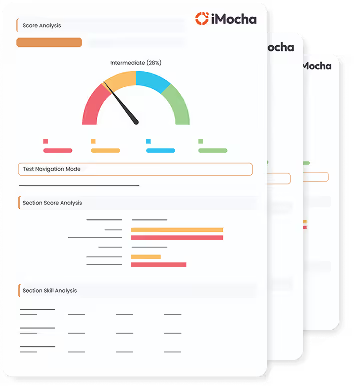
This a comprehensive PDF report, which you can instantly download and share with your hiring team or candidates for seamless collaboration.
Download Sample Report