

Skills transformation has become a strategic priority for organizations navigating rapid changes driven by AI, automation, and digital transformation. As job roles evolve and new technologies reshape industries, businesses must continuously adapt workforce capabilities to remain competitive. Traditional talent strategies centered around job titles and static career paths are no longer sufficient to address changing market demands and emerging skill requirements.
Organizations are increasingly adopting skills-first approaches to close skill gaps, improving workforce agility, and preparing employees for future roles. According to the World Economic Forum’s Future of Jobs Report 2025, nearly 39% of workers’ existing skill sets are expected to become outdated or transformed by 2030 due to technological disruption and evolving business needs.
By investing in skills transformation, organizations can build adaptable, future-ready teams while strengthening internal mobility, workforce planning, and long-term business growth.
What Is Skills Transformation?
Skills transformation is the strategic process of redesigning workforce strategies around employee skills instead of traditional job structures. It helps organizations identify skill gaps, develop critical capabilities, and adapt workforce competencies to meet evolving business and market demands.
Unlike conventional training initiatives, skills transformation combines workforce intelligence, skills assessments, upskilling, reskilling, and workforce planning to build a more agile, adaptable, and future-ready workforce.
The Impact and Importance of Skills Transformation in an Organization
Strategic skills transformations are effective initiatives to equip organizations with the skills necessary for success.
McKinsey's research mentions that organizations implementing all key practices associated with these initiatives report a nearly 100% success rate, significantly outperforming those that neglect even one aspect.
Here's how it helps an organization:
- Improved Competitiveness: A skilled workforce is a strategic asset that enables organizations to get a competitive edge by staying ahead of industry trends.
- Increased Productivity: Organizations can cultivate a highly productive workforce capable of delivering exceptional results.
- Reduced Staff Turnover: A commitment to employee development fosters a positive work environment that enhances retention, mitigating the costs associated with staff turnover.
- Adaptability to Change: A competent staff is better suited to negotiate the ever-changing world of technical breakthroughs, market upheavals, and strategic adjustments to ensure organizational resilience.
Key Components of Skills Transformation
Successful skills transformation requires a structured approach that aligns workforce capabilities with evolving business goals. Here are the key components of skills transformation:
1. Skills Assessment
Skills assessment helps organizations evaluate employee competencies, identify existing capabilities, and uncover critical skill gaps across the workforce.
2. Skills Intelligence
Skills intelligence provides data-driven insights into workforce skills, emerging capabilities, and future talent requirements to support better talent decisions.
3. Upskilling and Reskilling
Upskilling and reskilling initiatives help employees strengthen existing skills and develop new capabilities required for evolving job roles and business needs.
4. Skills Benchmarking
Skills benchmarking measures workforce capabilities against industry standards and business requirements to improve workforce readiness and performance.
5. Workforce Planning
Strategic workforce planning aligns employee development and workforce capabilities with long-term organizational goals and future business demands.
Strategies for Skills Transformation
Skills transformation helps organizations build a future-ready workforce by closing skill gaps, improving workforce agility, and aligning employee capabilities with evolving business needs. Here are five key strategies for successful skills transformation.
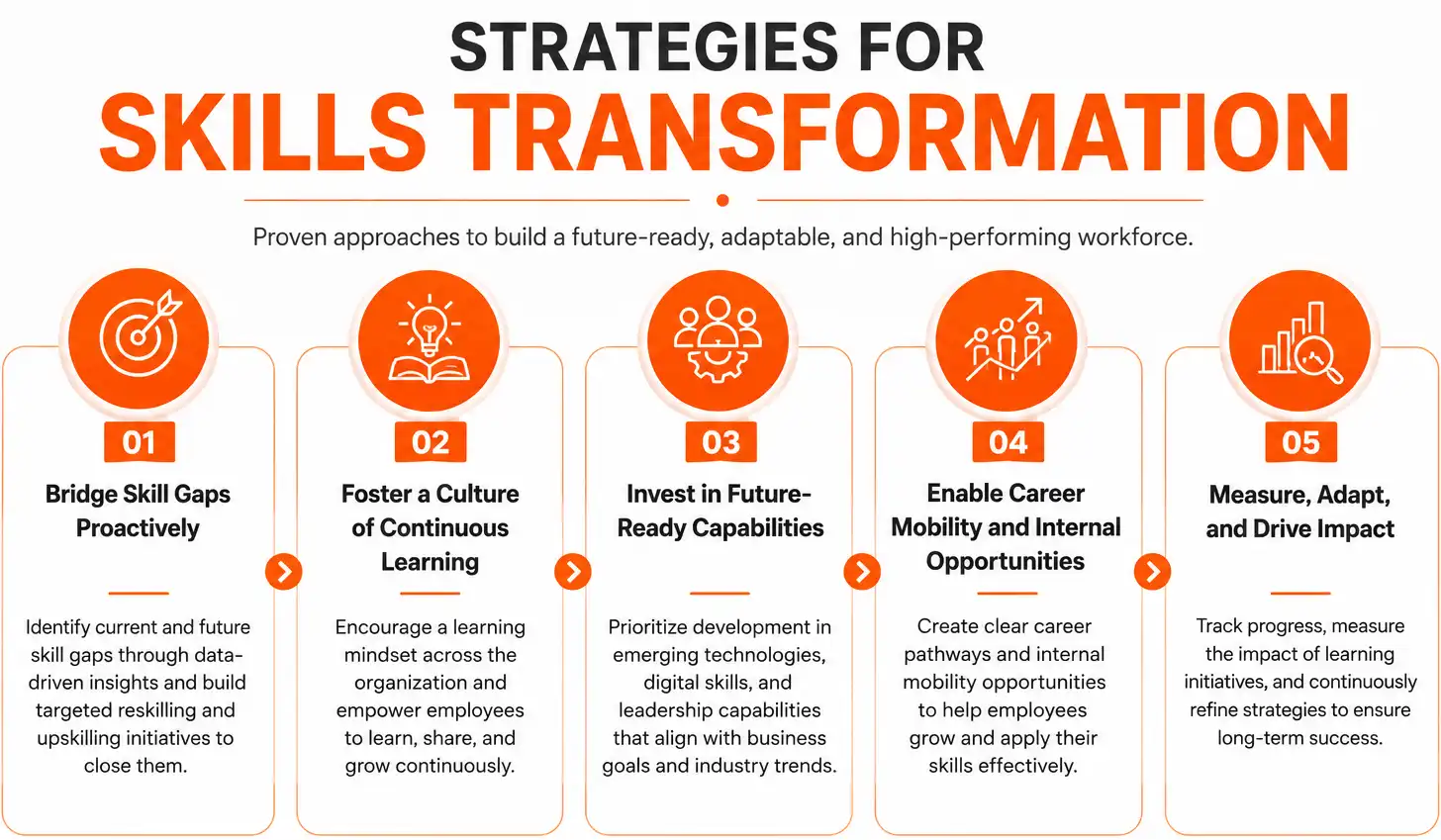
1. Conduct a Skills Gap Analysis
The first step in skills transformation is understanding existing workforce capabilities and identifying gaps between current and future skill requirements. Organizations should assess employee competencies, benchmark skills against business goals, and create a comprehensive skills inventory to improve workforce visibility.
A detailed skills gap analysis helps organizations make informed decisions around hiring, workforce planning, talent deployment, and employee development.
2. Build a Skills Taxonomy
A standardized skills taxonomy creates a common framework for organizing and defining workforce skills across the organization. It helps map skills to specific roles, identify emerging capabilities, and align learning initiatives with business objectives.
A well-structured skills taxonomy also improves workforce planning, internal mobility, and strategic talent management by providing a clear understanding of workforce capabilities.
3. Invest in Upskilling and Reskilling
Continuous learning is critical for building a future-ready workforce. Upskilling helps employees strengthen existing capabilities, while reskilling prepares them for entirely new roles and responsibilities.
Organizations should develop personalized learning pathways that combine technical training, soft skills development, mentorship, and hands-on learning experiences. Investing in employee development not only improves workforce readiness but also enhances employee engagement and retention.
4. Leverage Skills Intelligence
AI-powered skills intelligence platforms help organizations gain deeper visibility into workforce capabilities and future talent needs. These tools can identify emerging skills, predict workforce trends, automate skills mapping, and recommend personalized learning opportunities.
By leveraging workforce intelligence and AI-driven insights, organizations can make faster, data-backed decisions around hiring, talent development, internal mobility, and strategic workforce planning.
5. Create Personalized Learning Pathways
Employees have different learning styles, career goals, and skill gaps. Personalized learning pathways help organizations deliver targeted development programs based on individual workforce needs.
Combining digital learning, experiential training, coaching, and continuous feedback enables employees to build relevant skills more effectively. Personalized learning also helps organizations create a culture of continuous improvement and long-term workforce adaptability.
Explore skills architecture that support skills transformation, internal mobility, and future-ready workforce planning.
Challenges of Skills Transformation
To ensure successful skills transformation, organizations must overcome several workforce and operational challenges.
- Lack of Skills Visibility: Organizations often struggle to maintain accurate and updated workforce skills data.
- Rapidly Changing Skill Requirements: Evolving technologies and business demands continuously reshape workforce skill needs.
- Resistance to Change: Employees and leadership teams may resist adopting new skills-first strategies and learning initiatives.
- Fragmented Workforce Systems: Disconnected HR and talent management systems can limit workforce visibility and planning.
- Measuring Transformation Success: Tracking skill development, workforce readiness, and business impact can be challenging for organizations.
Explore effective ways to implement workforce skills transformation and future-proof your team.
Conclusion
Skills transformation has become essential for organizations looking to build a future-ready workforce in an evolving business landscape. By adopting a skills-first approach, they can build a skills-based organization, close skill gaps, improve workforce agility, strengthen internal mobility, and align employee development with long-term business goals.
Implementing effective strategies such as AI skill gap analysis, upskilling, workforce planning, and skills intelligence enables organizations to adapt to changing workforce demands and remain competitive. As technologies and business needs continue to evolve, organizations that invest in continuous workforce development will be better positioned for long-term growth and success.
Empower skills transformation with skills data enrichment that creates accurate, role-aligned profiles for workforce growth.
FAQs
How does skills transformation impact employee attrition?
A well-executed skills transformation reduces employee attrition. Investing in employee development and growth opportunities creates an engaging and fulfilling work environment. Higher morale, lower turnover rates, and greater job satisfaction are some results.
How does skills transformation differ from traditional hiring methods?
Skills transformation adopts a more comprehensive strategy than typical hiring practices, which are limited to filling certain tasks. It strongly emphasizes recognizing and developing the skills necessary for success in the future, regardless of present job titles. As a result, businesses are better equipped to react quickly to shifting consumer needs.
How can I implement skills transformation in my organization?
Analyze the organization's skill gaps to determine the skills required and create a thorough skills strategy. Implement training, coaching, and mentoring programs to motivate staff members to acquire new abilities. Track and assess the results of all efforts to ensure the intended outcomes are being attained.

