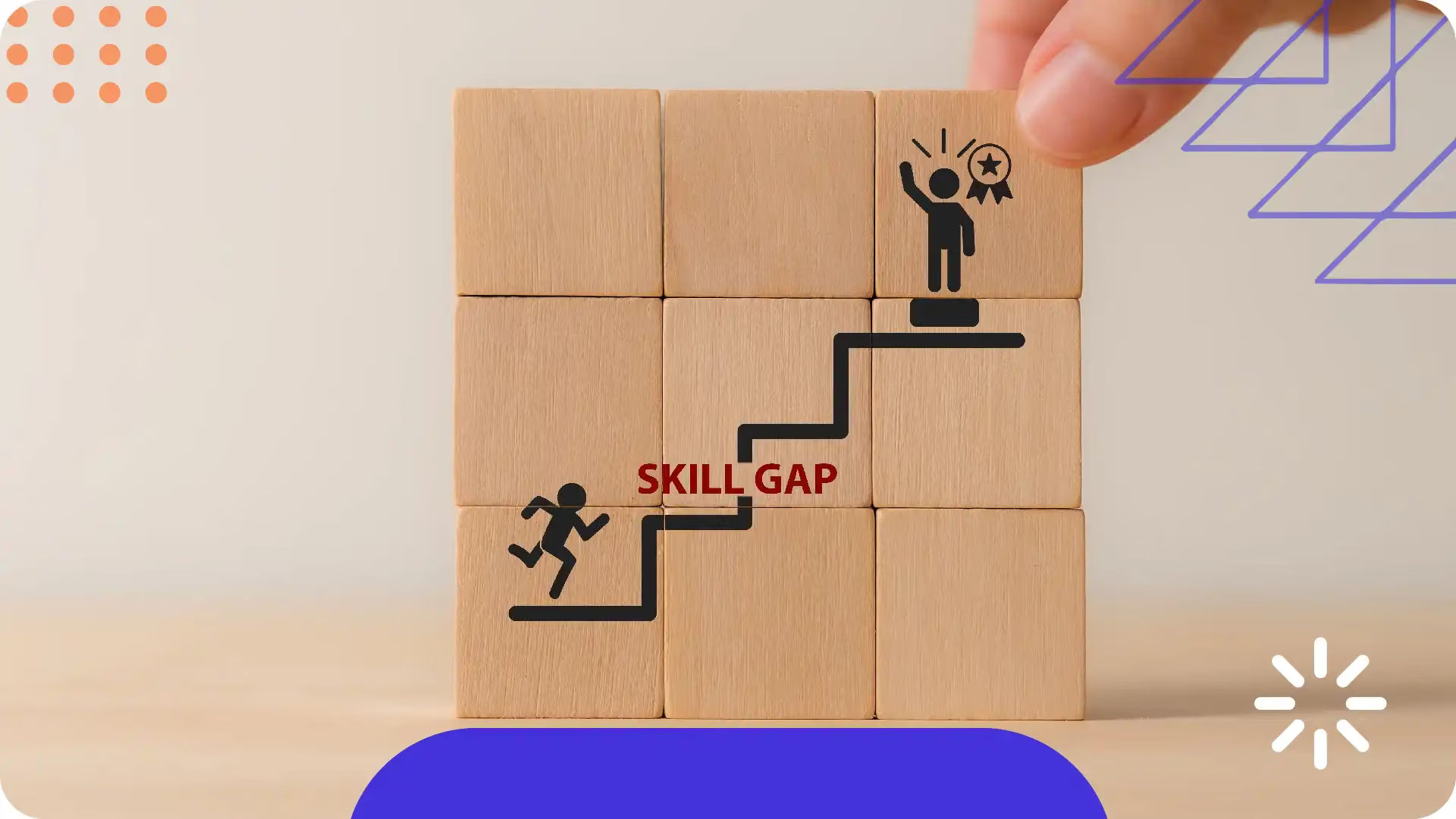
Manufacturing industry’s talent gap has been rapidly increasing with the onset of automations and technical enhancements taking place at present. Growing gap states an alarming situation, with new trends replacing traditional strategies, competition against IT and tech firms that have digitalized their operations and talent diversion toward these firms.
According to records, 80% of manufacturers cite skilled labor shortages as their biggest challenge in 2026, and 71% say it is already impacting operations, creating an urgency that demands prompt action from HR teams and leadership to critically acknowledge the workforce challenges. It is not just limited to short-term hiring but has now become a business-critical issue, as avoidance in addressing might impact global economic growth, affect long-term global talent supply chains, causing inflation in the economy.
Manufacturers must take proactive actions to overcome these gaps and stay competitive in this complex and technology-driven environment. In this article, we will explore about the manufacturing talent gap, its causes and impact, practical strategies to identify and address them to understand the future of manufacturing workforce.
What is the Manufacturing Talent Gap?
Manufacturing talent gap highlights shortage of skilled talent within organizations due to accelerating retirements, no knowledge transfer to the next generation, rapid innovation and automation with increased AI usage in industrial operations, and lastly changing workforce expectations.
The initial cause is the skills gap due to the aging workforce. Manufacturing talent, at present, lacks technical, digital, and problem-solving skills required for evolving manufacturing, especially in the context of industry 4.0.
Another cause is labor shortage; lack of sufficient workers, along with retirements and weak talent pipelines, makes replacement difficult, leading to operational strain, increased workload, and higher employee turnover.
For e.g.,
- Shop floor workers - Lacking skills to operate digitally enabled and automated production systems.
- CNC machinists - Lack of understanding of modern CNC technologies, advanced programming, and precision machining.
- Maintenance technicians - Lesser knowledge of managing smart equipment, predictive maintenance, and data-driven diagnostics.
- Automation and robotics engineers - Lesser expertise with, designing, implementing and automating robotic systems.
Key Causes of the Manufacturing Talent Gap
1. Aging Workforce
Aging workforce possess defined traditional skills/strategies, but with retirements exceeding, these skills are getting difficult to transfer to the next generation. Today, manufacturing industries are facing higher skills gap due to limited mentorship time and lack of structured knowledge-transfer systems, creating a learning barrier for new joiners, causing no hands-on training insights.
2. Skills Mismatch
A growing disconnect between traditional manufacturing and digital-first requirements are very evident, as most traditional manufacturing jobs are manually practiced. Today’s environment demands expertise in automation, digital systems, and advanced machinery to facilitate faster implementation and adaptation toward industry 4.0 capabilities. Adapting such skills in a short span remains a challenge, causing a skills mismatch.
3. Perception Problem
Today’s generation is aware of their career choices and are less attractive to jobs demanding excessive manual efforts. A presumed perception of manufacturing jobs being outdated, manually straining, and less appealing in the younger workforce discourages the talent to enter in this industry, diverting them to tech and IT firms where digital transformation is scaling.
4. Rapid Technological Advancements
Rise of automation, Artificial Intelligence, the Internet of Things, and other technological advancements have significantly transformed manufacturing processes. Though it has improved efficiency and productivity, it has also made upskilling crucial. This technological change contributes to AI skills gap, overshadows the ability of the new workforce to adapt, due to the retirement of existing employees and insufficient training time for new ones.
5. Education and Training Gaps
As the manufacturing industry goes through technical advancements, with automation, innovation, and designing pacing higher than ever, academics within universities still align with the theoretical aspects of teaching. With limited vocational and hands-on training, upcoming talents are deprived of practical experience and job-ready skills, creating a major skills gap and delaying fast onboarding.
Impact of the Talent Gap on Manufacturing Businesses
1. Reduced Productivity
One major impact of the talent gap on the manufacturing business is due to unfilled roles. Existing talent faces many issues due to fulfilling those responsibilities such as increased workload, errors, and fatigue, slowing output levels, delivery timelines, and quality levels. Additionally, persistent shortages can disrupt supply chains, widening the manufacturing talent gap within organizations.
2. Increased Operational Costs
The costs are majorly impacted due to compensation entitled to existing workforces’ overtime; majorly caused by hiring inefficiencies where lack of hands-on experience incurs training expenditure. Here’s how overall operational costs increase within an organization, leading to less productivity and efficiency.
3. Delayed Digital Transformation
The existing talent bound to perform manual process takes time or avoids adaptation of new practices due to limited expertise and technical difficulties. Delayed adaptation leads to delayed digital transformation, underperformance of equipment, and reduced ROI, creating barriers to progressive manufacturing goals.
4. Supply Chain Disruptions
Talent shortages become an overall productivity issue. Since potential talent has preconceived notions about manufacturing industries, the talent supply for manufacturing industry becomes minimal. This gives rise to operational strains on existing workload, missing crucial deadlines to no strategic task allotment, thereby delaying production activities.
5. Competitive and Revenue Risks
A talent gap in the manufacturing industry is impacted as potential talents divert to firms scaling smartly using automation and innovation. This initiates a competitive risk due to direct competition being against IT and tech firms and revenue risk as due to unfilled roles, no potential use of systems by existing talent due to limited expertise. This creates an obstacle for innovating and meeting demands on time.
How to Identify Talent Gaps in Manufacturing Workforce
1. Skill Assessments
Organizations can bulk assess the current employee capabilities using skills assessment platforms as part of broader skills gap analysis, identifying proficiency levels across roles much more easily. These analytics allow taking smarter, intellectual hiring decisions by providing skills insights for each employee.
2. Competency Mapping
Competency mapping involves defining role-specific skill requirements and comparing them with existing employee skills. In the manufacturing industry, it involves analyzing the skills related to automation, innovation, and digitalization of tasks. Organizations must assess employee skills against these required competencies to identify skill gaps and strengths, thereby aligning talent with roles and ensuring workforce readiness.
3. Workforce Analytics
Analyzing skill distribution across teams informs how data-driven capabilities are spread within an organization. Leveraging skills analytics with comprehensive data of required and existing skills helps identify trends in skill shortages, such as minimal understanding of digital operations, automation and innovation practices. This helps perform talent gap analysis and address critically growing and recurring skill gaps earlier.
4. Performance Reviews and Feedback
Identifying manufacturing talent gaps becomes easier when insights are gathered from supervisors and managers, as they can easily detect these gaps in real time. Early detection allows timely interventions in forms of training, upskilling, and workforce adjustments, ultimately enhancing productivity and efficiency.
5. Operational Metrics Analysis
Operational metrics analysis involve tracking key metrics such as productivity, quality, and downtime to evaluate workforce performance. By comparing these metrics against standard benchmarks, organizations can evaluate performance and fulfill skill gaps intelligently, thus enhancing operational efficiency. Here’s when skills intelligence for manufacturing can be implemented to facilitate more insightful decisions.
Strategies to Close the Manufacturing Talent Gap
1. Upskilling and Reskilling
Provision of continuous learning programs to employees promote faster upskilling and reskilling, facilitating internal mobility efficiently. Once employees are trained in role-specific and industry-relevant skills, they deliver higher value, justifying training investment.
2. Skills-Based Hiring
Today’s organizations are using skills-first approach to stay competitive. Today, skills-based hiring or hiring based on capabilities has become the new norm, shifting focus from formal degrees. This helps expand access to non-traditional talent pools, who have diverse and job-relevant skills.
3. Industry-Academia Partnerships
Upgrading and adapting as per the environmental shifts is necessary, requiring strong strategic industry-academia partnerships. Industries can provide expertise on emerging skills, while universities can align curricula accordingly. Apprenticeships and conducting vocational programs as campus hiring strategies allow HR leaders to hire diversely skilled talent.
4. Leveraging Technology for Workforce Development
Innovation and automation are transforming manufacturing functions by integrating digital learning platforms for workforce development. Simulation-based training techniques and hands-on training tools help employees build relevant skills and contribute to critical roles.
5. Employer Branding and Workforce Attraction
The manufacturing industry’s roles and jobs are perceived as strenuous and manually straining. Thus, employers must reposition manufacturing careers for upcoming talent, highlighting the way technological advancements are making manufacturing operations easier, emphasizing innovation, technology, and career growth.
Future of the Manufacturing Workforce
In the future, the manufacturing workforce will be defined by the rise of hybrid roles combining technical and digital skills. With an increasing reliance on automation and Artificial Intelligence, the need for upskilling and reskilling employees has become necessary for organizations to stay competitive in smart manufacturing environments.
As the industry evolves toward Industry 4.0, trends show that continuous learning will become a strategic, long-term priority, enabling a strong workforce, technologically proficient, adaptable, and driven by innovation.
Conclusion
The manufacturing talent gap has evolved to become a critical business challenge, affecting productivity, efficiency, and long-term competitiveness. The technological advancements in automation and innovations, it is vital to address skill shortages to maintain better market position.
To achieve this, a shift from role-based to skills-based workforce strategies is highly essential. This shift determines the level of adaptability, continuous learning, and practical expertise. Such a transition helps address skill gaps, fulfilling them by training employees for future industry demands.
In the long run, organizations that invest in skills development and prioritize it today will be the ones that lead tomorrow, building a future-proof, talented, and agile workforce that drives innovation and sustainable growth.
FAQs
What skills are missing in today’s manufacturing workforce?
Today’s workforce is missing critical digital and technical skills, including automation, robotics, CNC programming, and data-driven decision-making. There is also a noticeable gap in problem-solving abilities and adaptability to modern, technology-driven environments.
Which manufacturing sectors are most affected by the talent gap?
Advanced manufacturing sectors such as automotive, aerospace, electronics, and precision engineering are the most impacted, as they depend heavily on skilled talent to manage automated and digitally integrated systems.
How does Industry 4.0 contribute to the skills gap?
Industry 4.0 accelerates the adoption of technologies like AI, IoT, and automation, increasing the demand for specialized skills. However, the current workforce often struggles to keep pace, widening the gap between required and existing capabilities.
How can small and mid-sized manufacturers compete for talent?
They can stay competitive by adopting skills-based hiring strategies, investing in continuous learning and development, building partnerships with educational institutions, and strengthening employer branding to showcase innovation and career growth.
Can automation replace the need for skilled workers in manufacturing?
No, automation does not reduce the need; it shifts it. There is a growing demand for skilled workers who can operate, maintain, and optimize advanced technologies, making human expertise even more valuable.