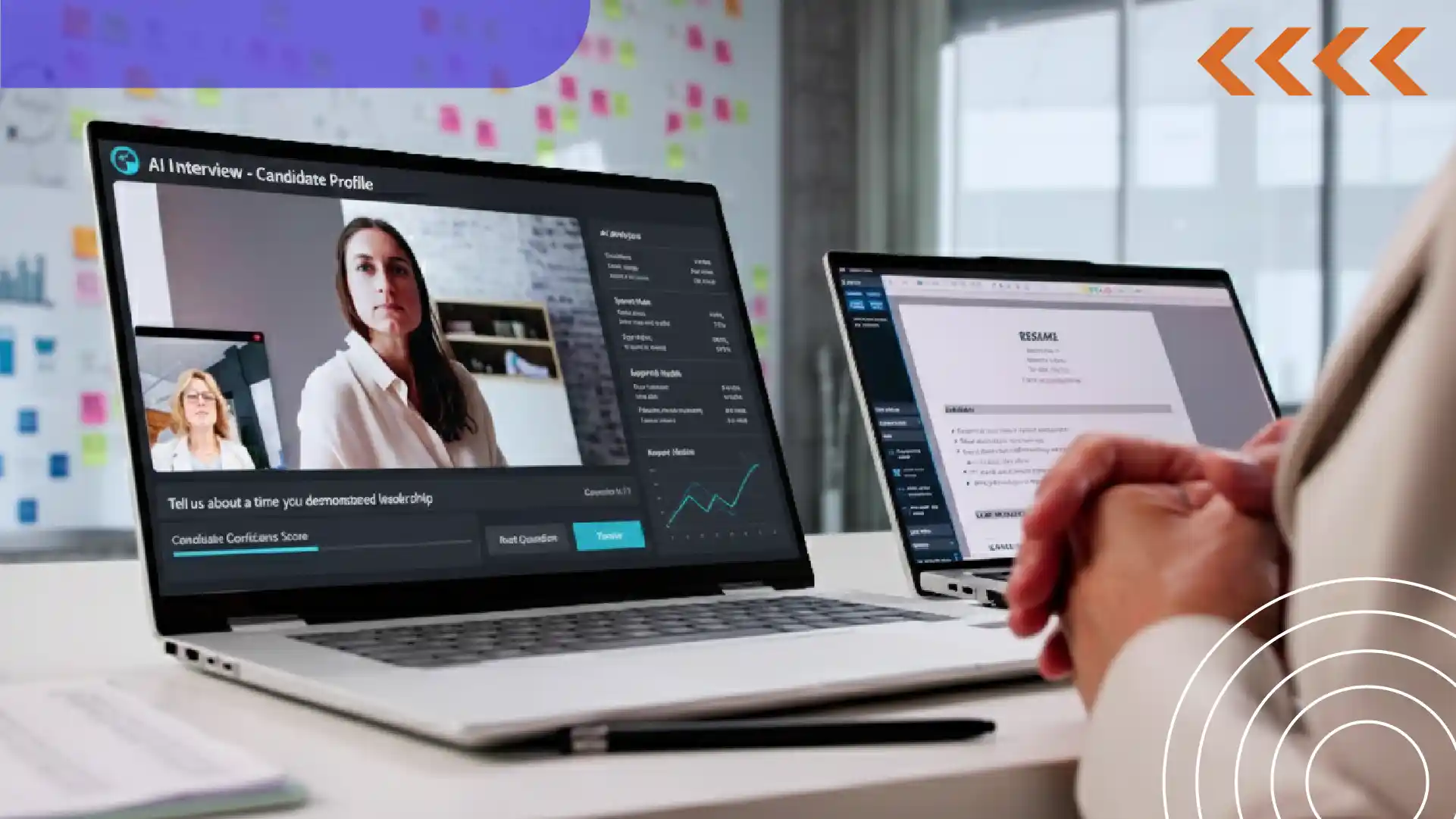
Recruitment has evolved dramatically over the last decade. From paper resumes and manual candidate screening to AI-powered talent acquisition platforms, hiring today is faster, smarter, and more data-driven than ever before.
As organizations face increasing pressure to hire top talent quickly while delivering a positive candidate experience, traditional screening methods are no longer enough. Recruiters often spend countless hours reviewing resumes, scheduling interviews, and conducting initial screening calls, only to discover that many candidates are not the right fit.
This is where one-way video interviews are transforming the hiring process.
By enabling recruiters to assess candidates asynchronously, one-way video interviews streamline screening, reduce time-to-hire, and help organizations make more informed hiring decisions.
What Is a One-Way Video Interview?
A one-way video interview, also known as an asynchronous video interview, is a pre-recorded interview where candidates respond to a predefined set of questions at their convenience.
Unlike live interviews, recruiters and candidates do not need to be present simultaneously.
The process is simple:
- Recruiters create and send interview questions.
- Candidates receive a secure interview link.
- Candidates record their responses within a specified time limit.
- Recruiters review the recordings when convenient.
- Qualified candidates move to the next stage of the hiring process.
This approach helps recruiters evaluate communication skills, confidence, job readiness, and cultural fit before investing time in live interviews.
Why Traditional Screening Methods Fall Short
Resumes only tell part of a candidate's story.
While resumes provide information about qualifications and experience, they often fail to reveal:
- Communication abilities
- Professional presence
- Problem-solving approach
- Motivation for the role
- Cultural fit
- Confidence and interpersonal skills
As hiring volumes increase, especially for campus recruitment, frontline hiring, graduate programs, and high-volume roles, recruiters need a more efficient way to identify qualified candidates.
One-way video interviews bridge this gap by adding a human dimension to early-stage candidate screening.
Top Benefits of One-Way Video Interviews
1. Significantly Reduces Screening Time
One of the biggest challenges recruiters face is the amount of time spent conducting preliminary interviews.
Scheduling calls, coordinating calendars, and conducting repetitive screening conversations can slow down hiring processes considerably.
With one-way video interviews:
- Recruiters can review interviews anytime
- Multiple candidates can be evaluated simultaneously
- Initial screening rounds become faster and more consistent
- Hiring teams can focus on high-potential candidates
This results in faster hiring decisions and reduced time-to-fill metrics.
2. Eliminates Scheduling Challenges
Coordinating interview schedules can be difficult, especially when hiring across different locations and time zones.
The challenge becomes even greater when interviewing passive candidates who are currently employed.
One-way video interviews allow candidates to complete interviews whenever it suits them.
Benefits include:
- No calendar coordination
- Greater flexibility for candidates
- Improved participation rates
- Faster movement through hiring stages
This convenience creates a better candidate experience while reducing administrative work for recruiters.
3. Enables Fair and Consistent Candidate Evaluation
Consistency is critical in hiring.
When recruiters ask different questions to different candidates, evaluating responses objectively becomes difficult.
One-way video interviews ensure every candidate receives:
- The same set of questions
- The same response time limits
- The same evaluation criteria
This standardized process promotes fairness and helps organizations make more objective hiring decisions.
4. Improves Quality of Hire
Beyond resumes and assessment scores, recruiters need insights into how candidates communicate and present themselves.
Video responses allow hiring teams to evaluate:
- Verbal communication skills
- Confidence levels
- Professionalism
- Critical thinking abilities
- Job-specific competencies
These insights help organizations identify candidates who are more likely to succeed in the role.
5. Supports High-Volume Hiring
For organizations hiring hundreds or thousands of candidates, traditional interviews can become a bottleneck.
Industries such as:
- IT and technology
- Banking and financial services
- Retail
- Manufacturing
- Healthcare
- Customer support
often require large-scale recruitment campaigns.
One-way video interviews help recruiters screen large candidate pools efficiently without sacrificing quality.
6. Enhances Candidate Experience
Modern candidates expect flexibility during the hiring process.
One-way video interviews empower candidates to:
- Choose when to complete interviews
- Record responses in a comfortable environment
- Showcase their personality and communication skills
- Avoid travel and scheduling hassles
This flexibility contributes to a more positive candidate experience and strengthens employer branding.
7. Facilitates Collaborative Hiring
Recruitment decisions often involve multiple stakeholders.
Instead of repeating interviews for every interviewer, recorded responses can be shared securely with hiring managers and decision-makers.
This enables:
- Faster feedback collection
- Better collaboration
- Improved hiring alignment
- More informed decisions
Best Practices for Effective One-Way Video Interviews
To maximize the effectiveness of one-way video interviews:
Keep Questions Relevant
Focus on role-specific competencies and behavioral indicators that predict success.
Limit Response Duration
A response window of 2 to 5 minutes per question helps candidates stay concise while reducing review time.
Communicate Expectations Clearly
Provide candidates with clear instructions regarding:
- Interview format
- Time limits
- Technical requirements
- Submission deadlines
Combine Video Interviews with Skills Assessments
Video interviews are most effective when paired with objective skills validation.
Organizations can assess technical competencies, cognitive abilities, and job-specific skills before evaluating communication and behavioral traits through video interviews.
How iMocha Simplifies Candidate Screening with One-Way Video Interviews
Modern hiring requires more than resume screening. Recruiters need a comprehensive view of candidate capabilities before making hiring decisions.
iMocha's Skills Intelligence Platform combines scientifically validated skills assessments with One-Way Video Interview capabilities, enabling organizations to evaluate both technical skills and communication competencies within a single platform.
With iMocha, recruiters can:
- Conduct asynchronous one-way video interviews
- Assess communication skills and behavioral skills
- Evaluate technical competencies through skill assessments
- Streamline high-volume hiring workflows
- Reduce screening time and hiring costs
- Collaborate with hiring managers through recorded interview reviews
- Improve quality of hire through data-driven candidate evaluation
By integrating video interviews with skills assessments, organizations gain a holistic view of candidates and can make faster, more confident hiring decisions.
The Future of Candidate Screening
As hiring becomes increasingly digital, organizations are adopting technologies that improve efficiency while maintaining a human-centered approach.
One-way video interviews have emerged as a powerful solution for modern recruitment teams looking to:
- Accelerate hiring
- Improve candidate experience
- Standardize evaluation processes
- Reduce scheduling complexity
- Enhance hiring quality
When combined with skills-based assessments and talent intelligence platforms like iMocha, one-way video interviews help organizations identify the right talent faster and build stronger, future-ready workforces.
Conclusion
One-way video interviews are no longer just a convenience. They have become a strategic advantage for organizations seeking to hire efficiently in a competitive talent market.
By enabling flexible, scalable, and objective candidate screening, one-way video interviews help recruiters save time, improve collaboration, and make better hiring decisions.
With iMocha's integrated One-Way Video Interview and Skills Intelligence Platform, organizations can create a seamless hiring experience that evaluates both skills and communication competencies, ensuring every hiring decision is backed by data and insight.