
We are already in 2026 and almost halfway through January. It is indeed the right time to analyze HR technology trends. Therefore, this article will examine the top five HR technology-based trends that will take a step up in 2026 and the future. There are several HR tech trends to consider, from increased use of cloud-based HR systems to upscaling remote/hybrid work model solutions.
So, let’s not beat around the bush and dive right into the details.
Cloud-based HR systems

“There is no business strategy without a cloud strategy,” said Milind Govekar, Vice President of Gartner, eliciting that the world of cloud will continue to revolutionize different aspects associated with businesses.
Cloud-based software plays a significant role in HR operations, ranging from payroll to time management. It is indeed one of the notable HR technology trends in 2026 and beyond. Organizations can also work around several HR bottlenecks, including standardizing policies and creating coherent workflows with the cloud.
With cloud-based HR systems, your organization, especially your HR, can gain several benefits, including:
- Cloud-based tools can reduce the time and effort spent by HR professionals on manual administrative tasks by bringing in the ease of automation. Through this, your HR team can prioritize other productive assignments, like people analytics, business growth, etc.
- Since cloud-based systems are hosted on secure servers, it improves flexibility and accessibility. Therefore, you can now access and print any document based on your requirement within a few seconds without browsing through thousands of excel sheets on your system. Besides, your employees can access these types of software from anywhere, even using their mobile phones. They also have easy-to-use user interfaces, adding to their user-friendliness.
- While relying on the cloud, you don’t have to worry about regular updates or deployments. It is because these tasks are automated.
- Cloud can facilitate safety as they have the latest methods for safeguarding data and privacy. When it comes to Europe, it is integral to enable data privacy as part of being compliant with GDPR.
- These tools are data-centric and would reduce errors and other inefficiencies.
- Cloud-based software facilitates remote/hybrid work environments since teams are spread worldwide.
So, in short, you no longer have to worry about being lost in paperwork with cloud-based HR systems. Instead, by using these critical tools, you can invest more time strategically improving your business.
AI-powered skills intelligence platforms to provide hire-to-retire solutions

Harnessing data with AI and machine learning can open up new opportunities for your organization. With the pandemic, there has been a drastic shift in the pace at which AI got adopted in workplaces.
As per a report from PwC, 52% of companies accelerated their AI adoption during the pandemic, which will increase further in no time, improving business growth and facilitating competitive advantage.
Organizations rely on AI to enhance their products, services, customer experience, and employee experience. To improve employee experience, HR departments within companies depend on different AI-powered tools.
The AI-powered skills intelligence platform has shifted from the “nice to have” to the “need to have” list of tools, providing hire-to-retire solutions. Whether it be recruiting or improving employee engagement, a skills intelligence platform can play a pivotal role in performing them seamlessly by making the best use of your company’s skills inventories and skills data.
A skills intelligence platform making use of AI can help you in the following ways:
- Assists HR professionals in identifying the best possible pathways for finding the suitable candidates
- AI can help determine your ideal candidate, what EVPs are significant for them, how to create the pipeline for these candidates
- Aids in improving Diversity, Equity, and Inclusivity within your company by hiring and retaining talent without any systemic or unconscious biases
- Uses skills taxonomies and helps with building future-ready teams
- Assists in improving the efficiency of Learning and Development activities
You can explore how skills intelligence makes the best out of AI from here!
This AI-powered tool can make the lives of HR professionals, employees, and employers much more convenient. It can benefit different HR functionalities, ranging from recruitment to employee engagement.
Data-driven Diversity, Equity, and Inclusivity (DEI) solutions

Indeed, building diversity within companies is a hot-button issue. But, in most cases, organizations need help to resolve diversity, equity, and inclusivity issues. As per a study by SHRM on the barriers to increasing DEI, the researchers found that the belief that the workforce is sufficiently diverse is a significant concern.
Apart from this, there are other issues too, including:
- Many companies are risk averse and fear the legal complications and other issues that may arise with diverse data collection.
- Several organizations value body count—an outcome metric— over the process metric, including pinpointing problems in hiring, promotion, etc.
- Companies find it challenging to perform continuous data collection and don’t have the right metrics and tools to analyze diversity-related data, leading to analysis paralysis.
Therefore, in a nutshell, companies have to delve deeper into the back alleys and devise DEI strategies to make the best out of data. While doing so, it is integral to consider remote and hybrid employees and their representation. Your organization can capture data, identify, and analyze them anonymously with tools powered by artificial intelligence like skills intelligence, Human Capital Management Software, etc.
Thus, in 2026, your organization can enhance its DEI initiatives by leveraging HR tech architectures and diversity.
Self-service HR portals
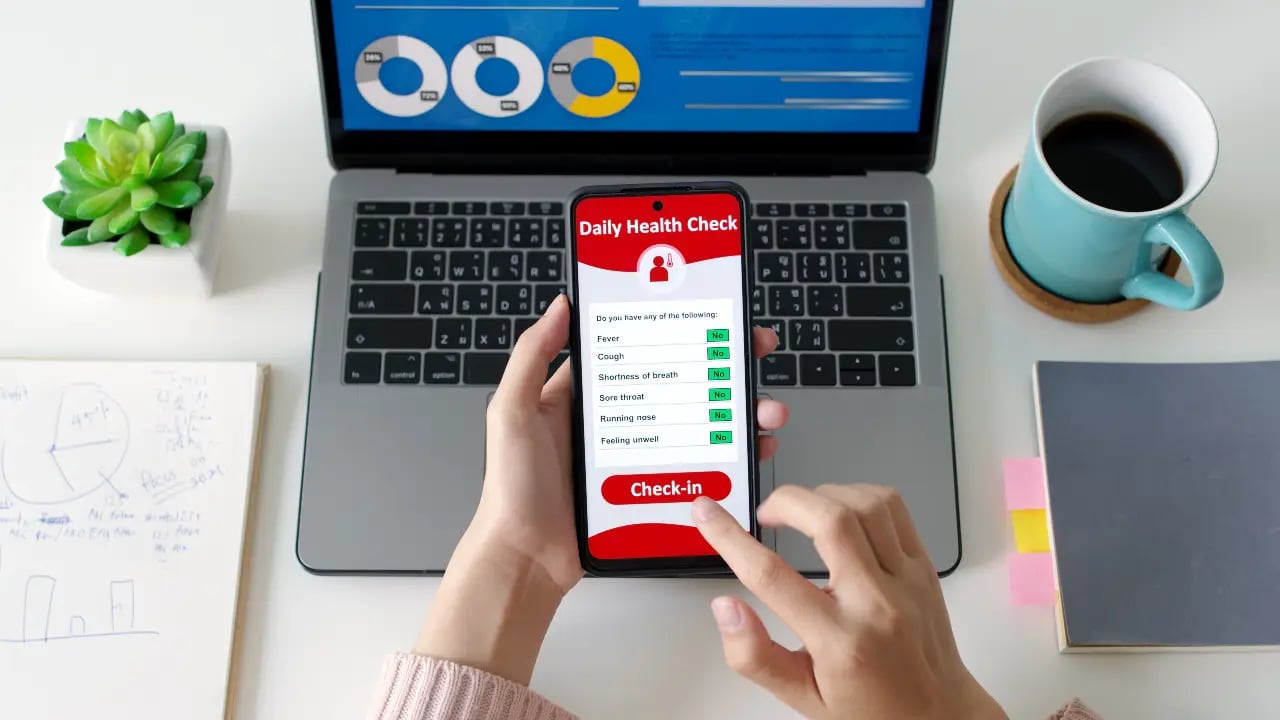
Regardless of the size of your organization, introducing employee self-service HR portals can assist in streamlining and managing your internal HR-related activities. Your employees will no longer have to board several to-and-fro email trains to access or update information.
As per a research survey conducted by Paychex, 78% of full-time US employees found the self-service portal for HR-related activities highly beneficial as it brings everything to their fingertips. Employees can access their payrolls, benefits administration, leave entitlements, compliance details, etc.
Along with benefiting employees, it also makes life easier for HR professionals. With these employee self-service centers in place; you can manage internal communications effectively. Consolidation of employee information and their access also becomes convenient.
Although self-service portal adds convenience, this in no way means that they act as a replacement for your HR team. Instead, these portals reduce manual tasks and help your HR professionals invest time in other essential duties.
Apart from this, incorporating employee self-service portals can facilitate the following:
- Reduce paper works for HR professionals
- Help build a connection with new employees during the employee onboarding process and provide them with clarity on organization structure and values
- Streamline all the HR-related documentation process
- Assist in measuring employee performance, success, and goal achievements, easily unbiasedly and even integrate with HRMS
- Lower the chances of any fraudulent practices or data breaches because of the availability of features like multi-factor authentication (MFA)
- Aid employees solve simple HR-related problems by themselves without seeking assistance now and then
- Provide personalization and easy customization with the assistance of Artificial intelligence and usage of chatbots to help employees with HR functions
Thus, these are some of the many benefits your company can garner by implementing this HR tech trend within your organization.
Remote/Hybrid work model solutions

As per the recent American Opportunity Survey conducted among 25,000 Americans, 87% of the people stated that they would prefer work-from-home opportunities if facilitated. Similarly, 35% of the survey participants are working remotely full-time. When this data is extrapolated, it will account for 36 million, which indeed is a huge number.
As the pandemic began, companies adopted remote or hybrid work culture as a timely solution. However, remote or hybrid work has become a part of the ecosystem, and many, as we have seen above, prefer it over on-site jobs due to its flexibility, convenience, and several other factors. Remember that work cultures differ between fully remote and hybrid (or partially remote, where the employee would have to work from the office too).
Therefore, as part of managing employees efficiently and ensuring their satisfaction, it is integral for companies to use the right tools. Similarly, these architectures have to support the wellness and well-being of your employees so that they can work conveniently without hampering their productivity.
Unlike during the pandemic, an organization nowadays has both work-from-home and office employees. This could even include employees working in different time zones. So, HR has to ensure that you are implementing technology solutions that add convenience and ease of communication.
Along with HRMS, employee self-service portals, productivity software like Microsoft 365, and communication tools like Slack, Microsoft Teams, and Zoom, there have to be platforms that can aid the well-being of remote employees, hyper-personalized learning and development platforms, etc.
Currently, the metaverse is also stepping into the arena of remote and hybrid work culture. Therefore, organizations have to prioritize this and leverage HR tech tools that can enhance employees' journeys, which will indirectly pave the way for improving business growth.
Final thoughts
These are some of the top HR technology trends for 2026 and beyond. By prioritizing them and investing in these activities, your organization can enhance business growth and achieve better results in the long run.
Along with this, there are other HR priorities too, such as investing in upskilling and reskilling activities, focusing on people-first culture, improving employee well-being and mental health, giving importance to the future of work, enhancing recruitment strategies, and so forth.
References
- Gartner (2021, November 10). Gartner Says Cloud Will Be the Centerpiece of New Digital Experiences.
- PWC (n.d.). PwC 2022 AI Business Survey.
- SHRM (n.d.). Global Diversity and Inclusion Perceptions, Practices and Attitudes.
- CPA Practice Advisor (n.d.). Survey: Most U.S. Workers Want Self-Service HR and Payroll Tools.
- McKinsey (2022, June 23). Americans are embracing flexible work—And they want more of it.
.avif)
