

Cornerstone OnDemand is a widely used learning and talent management platform, but it may not fit every organization’s evolving workforce needs. Businesses looking for more specialized capabilities, easier administration, stronger skills intelligence, or different learning experiences may consider other options.
In this guide, we compare 10 of the best Cornerstone alternatives for 2026, covering their key features, best use cases, pros, and cons to help you identify the right platform for your organization.
10 Best Cornerstone Alternatives & Competitors
1. iMocha
iMocha is a Cornerstone alternative for organizations focused on skills intelligence, workforce assessment, and skills-based talent development. Its AI-powered Skills Intelligence platform helps organizations map workforce capabilities, identify skill gaps, and support hiring, upskilling, workforce planning, and internal mobility.
Best for: Enterprises focused on skills intelligence, workforce assessment, AI skill gap analysis, and internal mobility.
Here’s a breakdown of its features:
- AI-Powered Skills Intelligence: Maps workforce capabilities, identifies skill gaps, and supports data-driven talent decisions.
- Skills Mapping: Maps employee skills across roles and functions to improve workforce planning, development, and role alignment.
- Upskilling and Reskilling: Identifies skill gaps and supports targeted development programs for evolving roles and business needs.
- Skills Assessments: Assesses technical, functional, cognitive, and soft skills through a library of 10,000+ assessments.
- Skills Analytics: Tracks proficiency, skill development, and workforce readiness to support better talent and learning decisions.
- Integrations: Connects with LMS, LXP, and HR platforms to enable skills-based learning and streamlined workforce development workflows.
Pros:
- 10,000+ skills assessments
- Strong skill-gap and workforce insights
- Supports hiring, upskilling, and internal mobility
Cons:
- Not a complete LMS/HCM replacement
- Pricing is not publicly transparent
Why choose iMocha over Cornerstone?
Choose iMocha if your priority is skills intelligence, workforce assessments, and identifying skill gaps to support skills-based hiring, upskilling, and internal mobility.
G2 Rating: 4.4/5 (276 reviews)
Pricing: Checkout iMocha's Custom Pricing here
2. Workday
Workday is a cloud-based enterprise management solution that combines the functionality of human capital management, financial management, and enterprise resource planning, enabling organizations to improve HR, finance, and planning processes.
Best for: Large enterprises seeking an integrated HCM, talent management, and workforce planning platform.
Here’s a breakdown of its features:
- Personalized Experience: Driven by AI, it provides personalized user experiences based on the user role, tasks, and goals, reducing efforts and improving productivity and engagement.
- Talent Management: Track and develop employee skills, aligning the development of talent with organizational needs and goals with the help of performance management, succession planning, and career development tools.
- Payroll and Workforce Solutions: Provide accurate payroll and workforce management, including time tracking, scheduling, and absence management.
- Integrated Analytics: Advanced analytics and reporting capabilities for workforce and financial performance.
- Worldwide Compliance: Guarantees compliance with foreign regulations and standards, equipping organizations with solutions to oversee compliance in various regions and sectors.
Pros:
- Unified HR and talent management ecosystem
- Strong workforce analytics and planning
- Scales well for large enterprises
Cons:
- Complex implementation and administration
- Can be costly for smaller organizations
G2 Rating: 4.1/5 (1,698 reviews)
3. HowNow
HowNow is an all-in-one learning experience platform (LXP) that helps organizations create, manage, and deliver personalized learning experiences. It brings learning resources, knowledge, and development opportunities into the flow of work, helping employees access relevant content when they need it most.
Best for: Organizations seeking an AI-powered learning platform that integrates learning into employees’ daily workflows.
Here’s a breakdown of its features:
- AI-Based Personalization: Provides customized learning journeys based on individual profiles, roles, skills, and objectives.
- Content Curation & Creation: With this tool it’s easy to curate and create content from both internal and external sources.
- Skill Mapping: Maps, maintains, and grows resources aligned with organizational needs by mapping employee skills and determining learning needs as necessary.
- Social and Collaborative Learning: This enables knowledge-sharing processes by means of peer-to-peer interaction, user-generated content, etc.
- Analytics: Offers deep insights into how learners engage with it, track progress, and analyze business outcomes.
Pros:
- Personalized learning recommendations
- Integrates learning with workplace tools
- Strong knowledge-sharing capabilities
Cons:
- Less comprehensive than a full HCM suite
- May require integrations for broader HR functions
G2 Rating: 4.5/5 (53 reviews)
4. Docebo
Docebo is an all-in-one learning management system (LMS) that is concerned with the delivery, tracking, and management of employee training programs. As a Cornerstone OnDemand competitor, it is designed to grow the skill sets of employees across companies of all sizes.
Best for: Enterprises seeking a scalable, AI-powered LMS for employee, customer, and partner training.
Here’s a breakdown of its features:
- AI-based learning: Use artificial intelligence to customize learning experiences for users and to recommend relevant content.
- Social learning: Provides a way to share knowledge using user-generated content, forums, and collaborative learning spaces.
- Mobile Learning: Provides a mobile application for accessing training materials and courses while on the move.
- Extended Enterprise: Enable organizations to train outsiders — be it partners, customers, or stakeholders.
- Analytics and Reporting: Offers in-depth reporting about learner progress, course efficacy, and ROI.
Pros:
- Strong AI-powered personalization and automation
- Supports extended enterprise learning at scale
- Advanced analytics and integrations
Cons:
- Pricing is not publicly transparent
- Advanced features may require higher-tier plans
G2 Rating: 4.3/5 (748 reviews)
5. Thrive
Thrive is a learning management system (LMS) designed to help organizations deliver engaging employee training and development programs. Its intuitive user experience supports personalized learning, knowledge sharing, and continuous workforce development.
Best for: Organizations seeking a modern learning platform focused on employee engagement, upskilling, and collaborative learning.
Here’s a breakdown of its features:
- Dynamic Learning Pathways: Uses intelligent algorithms to map a learning path based on each user's performance and objectives.
- Easy Content Management: Provides a hassle-free interface to create, manage, and edit content, in different formats, conveniently.
- Competency Tracking: Helps in closely tracking employee skills and competencies combined with learning objectives based on organizational needs.
- Collaborative Learning Environment: Encourages engagement using discussion forums, peer assessments, and team-learning activities.
- Reporting and Analytics: Offers insights and data visualization on learning effectiveness & ROI.
Pros:
- Personalized learning experiences
- Strong social and collaborative learning features
- User-friendly learning experience
Cons:
- Less comprehensive than a full HCM platform
- May require integrations for broader HR functions
G2 Rating: 4.5/5 (90 reviews)
6. Nifty Learning
Nifty Learning is a modern learning management system (LMS) designed to help organizations deliver engaging and effective training programs. It supports employee learning, onboarding, and skills development through flexible learning experiences and centralized training management.
Best for: Organizations seeking a flexible LMS for employee training, onboarding, and skills development.
Here’s a breakdown of its features:
- AI-Powered Content Recommendations: Uses artificial intelligence to recommend content based on what users have engaged with and enjoyed in the past.
- Interactive Course Builder: A dynamic interface for creating interactive courses with multimedia elements without requiring extensive technical knowledge.
- Skill-Based Learning Paths: Supports the design of personalized learning paths that align with skills and career objectives.
- Advanced Analytics Dashboard: Provides detailed insights into learner progress, levels of engagement, and training effectiveness.
- Compliance Tracking: Makes the management and reporting of mandatory training and certifications easy.
Pros:
- User-friendly learning management
- Supports customized learning experiences
- Flexible training and content management
Cons:
- Smaller ecosystem than major enterprise LMS platforms
- May lack advanced HCM capabilities
G2 Rating: NA
7. Disprz
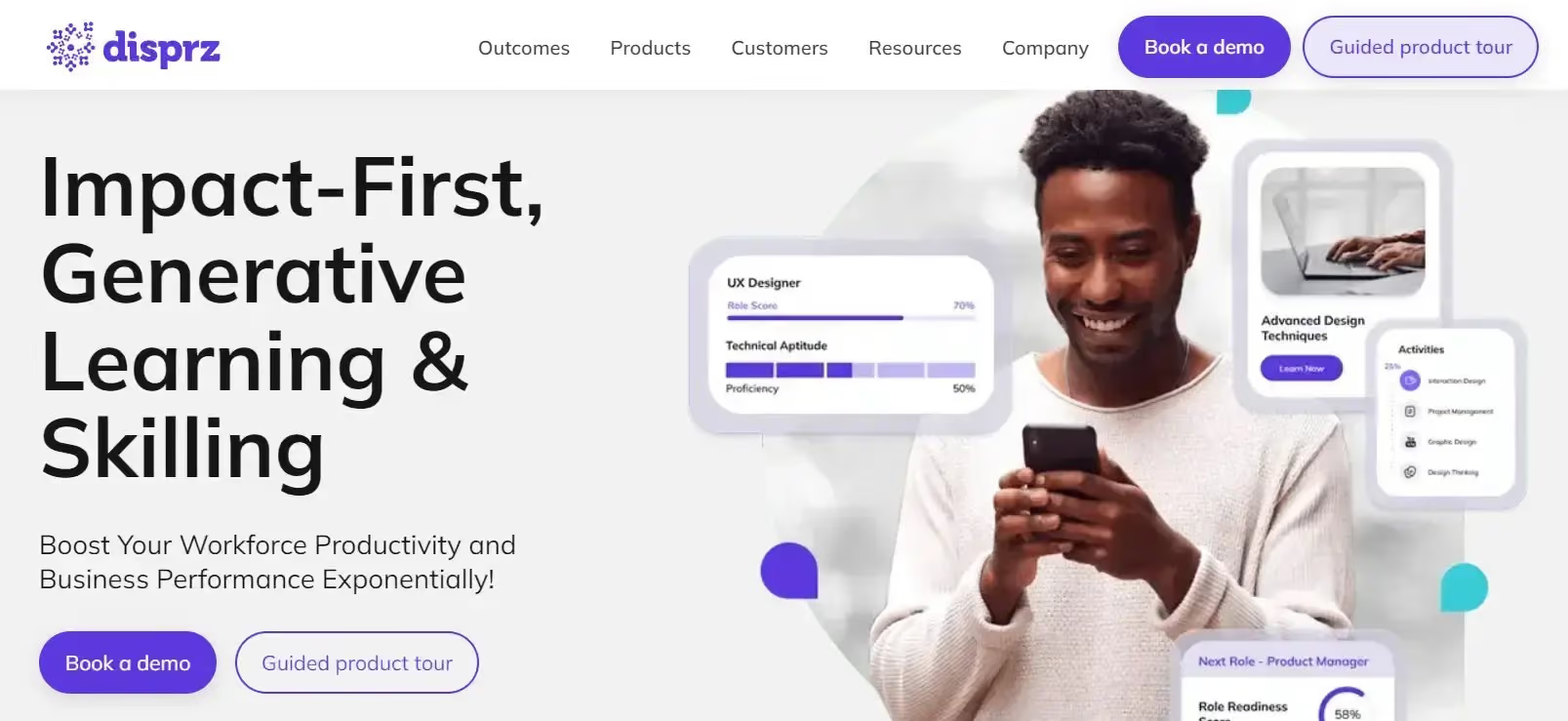
Disprz is an AI-powered learning and skilling platform designed to help organizations develop workforce capabilities and close skill gaps. As a Cornerstone competitor, it supports personalized learning, upskilling, and reskilling to drive continuous workforce development.
Best for: Enterprises focused on AI-powered learning, skills development, and workforce upskilling.
Here’s a breakdown of its features:
- Skill Intelligence: By using AI, it identifies the gap and the relevant learning paths that are most useful to close that gap.
- Role-based learning journeys: Offer personalized learning journeys based on desired roles and career paths.
- Performance Support Tools: Offer resources for on-the-job learning to help employees learn while they work.
- Engagement and Gamification: Integrates interactive features such as quizzes, challenges, and leaderboards to increase learner engagement.
- Views and Insights: Provides reports on progress, skill development, and ROI of learning to facilitate data-driven decision-making.
Pros:
- Strong AI-driven learning personalization
- Supports skills-based upskilling and reskilling
- Designed for enterprise workforce development
Cons:
- Pricing is not publicly transparent
- May require integrations for broader HCM functions
G2 Rating: 4.5/5 (81 reviews)
8. Edvanta
Edvanta is a learning management system designed to help organizations manage employee training, onboarding, and professional development. It offers flexible learning and content management capabilities for organizations looking for a modern alternative to traditional LMS platforms.
Best for: Organizations seeking a flexible learning platform for employee training, onboarding, and professional development.
Here’s a breakdown of its features:
- AI-based Recommend Learning: This feature uses AI to know which courses and content are most relevant to the learner profiles and what the goals of the organization are.
- Flexible Content: Offers simplified mediums to create rich learning content in the form of interactive content and assessments.
- Skill Gap Analysis: Analyzes the skill gap in the organization and the skill gaps can be remedied through specialized learning inputs.
- Extensive Performance Tracking: Provides insights into learner progress, course performance, and training impact.
- Personalized Learning Journeys: Enables the creation of personalized learning paths based on role or career trajectory.
Pros:
- Flexible learning management capabilities
- Supports customized training programs
- Suitable for employee development and onboarding
Cons:
- Smaller ecosystem than leading enterprise LMS platforms
- May lack advanced HCM and talent management capabilities
G2 Rating: NA
9. Absorb LMS
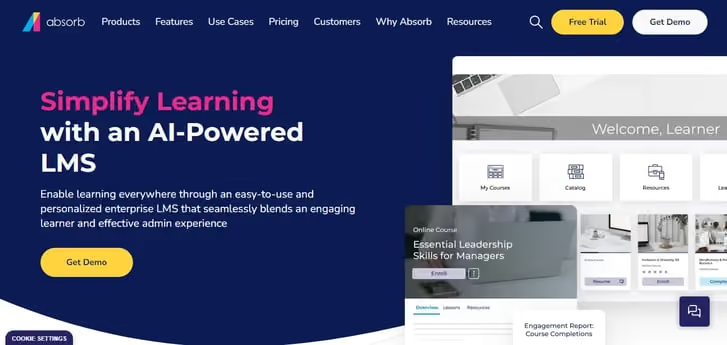
Absorb LMS is a modern learning management system designed to help organizations manage employee, customer, and partner training at scale. It combines learning administration, automation, reporting, and learner engagement features, making it a strong Cornerstone LMS alternative.
Best for: Organizations seeking a scalable LMS for employee, customer, and partner training.
Here’s a breakdown of its features:
- Smart administration: Smart admin features like automatic course assignments, reminders & certifications help save administrative time.
- Branding Customization: It gives organizations the freedom to create the LMS in their own desired looks and feels and create a branding consistently throughout the brand and makes sure the whole experience is seamless throughout.
- Social Learning Customization: In collaborative learning learner-generated content is encouraged, and peer-to-peer interactions help to create a sense of community.
- Analytics: It offers advanced and customizable analytics and reports to keep tabs on progress and the impact of the training.
- Compliance Training Management: Offers features for tracking required training and certifications.
Pros:
- Strong learner experience and administration
- Supports extended enterprise training
- Good reporting and automation capabilities
Cons:
- Pricing is not publicly transparent
- Limited broader HCM functionality
G2 Rating: 4.6/5 (958 reviews)
10. Degreed
Degreed is a skills-based learning experience platform (LXP) that helps organizations deliver personalized learning and support workforce development. It brings learning content, skills insights, and development opportunities together to support upskilling, reskilling, and career growth.
Best for: Enterprises focused on skills-based learning, personalized development, and internal mobility.
Here’s a breakdown of its features:
- Skill-based Learning: Makes users discover, assess, and develop competencies that matter to them, focusing the learning experience on skills.
- Content Aggregation: Organizes learning material from multiple sources; internal, and external content providers and open educational resources.
- Customized Learning Journeys: Highlights relevant content and builds personalized learning journeys using AI in accordance with an individual goal and unique interest.
- Skill Measurement and Verification: Supports assessment and validation of skills through peer and manager reviews.
- Career Mobility: Eases internal talent mobility by linking skills development to career opportunities inside the organization.
- Analytics and Reporting: Provides detail into skills gaps, learner engagement and business impact of learning.
Pros:
- Strong learning experience and skills development
- Personalized learning recommendations
- Supports upskilling and internal mobility
Cons:
- Not a complete HCM replacement
- Pricing is not publicly transparent
G2 Rating: 4.2/5 (42 reviews)
How to Choose the Best Cornerstone Alternative
The right Cornerstone OnDemand competitor depends on your organization’s learning, skills, and workforce needs. Consider these factors when comparing platforms:
- Core capabilities: Determine whether you need an LMS, skills intelligence, talent management, or a combination.
- Ease of use: Choose a platform that is intuitive for both learners and administrators.
- Integrations: Check compatibility with your existing HRIS, LMS, LXP, and other enterprise tools.
- Skills and analytics: Look for skills mapping, assessments, gap analysis, and workforce insights if skills-based planning is a priority.
- Scalability: Ensure the platform can support your workforce size and future growth.
- Pricing: Compare licensing, implementation, integrations, and other costs to understand the total investment.
- Support: Evaluate implementation assistance, customer support, training, and ongoing platform guidance.
Conclusion
The best Cornerstone alternative depends on your organization’s priorities, whether that is learning management, skills development, workforce planning, or talent mobility. Each platform on this list offers a different mix of capabilities, so the right choice comes down to your specific use case, integrations, scalability, and budget.
For organizations prioritizing skills intelligence, workforce assessment, skill-gap analysis, upskilling, and internal mobility, iMocha is a strong option to consider. Its skills-focused approach can help organizations make more informed talent decisions and build a more future-ready workforce
FAQs
1. What is the best alternative to Cornerstone?
The best Cornerstone alternative depends on your needs. iMocha is a strong option for skills intelligence, workforce assessment, skill-gap analysis, and internal mobility, while other platforms may be better suited to broader LMS or HCM requirements.
2. Which Cornerstone alternative is best for upskilling and reskilling?
iMocha is a strong fit for organizations that want to identify skill gaps, assess employee proficiency, and build targeted upskilling and reskilling initiatives.
3. Is iMocha a good alternative to Cornerstone?
Yes, especially for organizations focused on skills intelligence, workforce assessments, upskilling, and skills-based talent decisions. However, it is not a full replacement for every LMS or HCM capability Cornerstone offers.
4. Which Cornerstone alternative is best for skills intelligence?
iMocha is well suited to organizations that prioritize skills mapping, assessments, skill-gap analysis, workforce planning, and internal mobility.
5. What is the best Cornerstone alternative for workforce skills assessment?
iMocha is a strong option for organizations that need large-scale skills assessments, skills-gap analysis, and workforce insights to support hiring, upskilling, and internal mobility.

