"Work Intelligence" covers several distinct product categories, not one agreed definition.
Some platforms analyze internal tasks for AI impact. Others map occupations using external labor-market data. Some appear in these searches only because they touch skills, talent mobility, or workforce planning broadly.
This list groups each platform by what it actually does, so you can match the category to your actual question before comparing vendors within it.
Comparison table
Top 10 Work Intelligence Platforms for Enterprises
1. iMocha
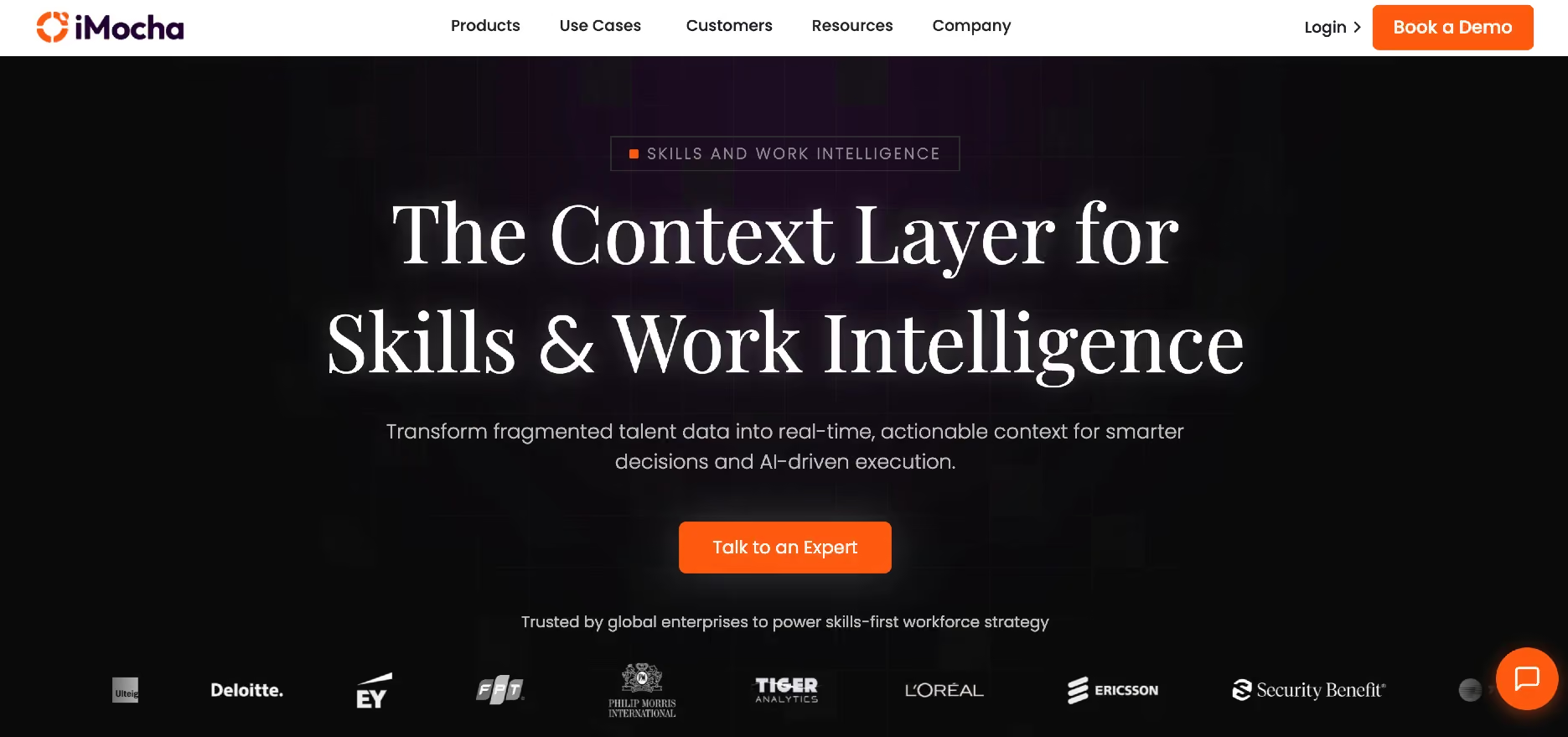
iMocha helps enterprises see which tasks AI is likely to reshape, through its Work Intelligence capability inside the Skills Intelligence Platform. It sorts tasks into four categories: critical, suitable for AI assistance, potentially AI-led, or expected to stay human-led. That task-level view then feeds directly into workforce capability data.
Key features:
- Task-level AI classification: the core capability behind the platform, sorting individual tasks as critical, AI-assisted, AI-led, or human-led so leaders can see exactly where AI is likely to change work first
- Skills Intelligence: turns task-level AI findings into workforce capability data, connecting what's changing about the work to who currently has the skills to do it
- AI Readiness: applies task-level findings to enterprise AI readiness planning, helping leaders prioritize which teams or functions to prepare first
- Strategic Workforce Planning: uses task-level shifts to clarify where headcount, structure, or role definitions are likely to change over time
- Skill Gap Analysis: connects identified task-level AI shifts to existing skill gaps, so capability planning accounts for where work is heading, not just where it stands today
G2 rating: 4.4/5 (276 reviews)
2. TechWolf
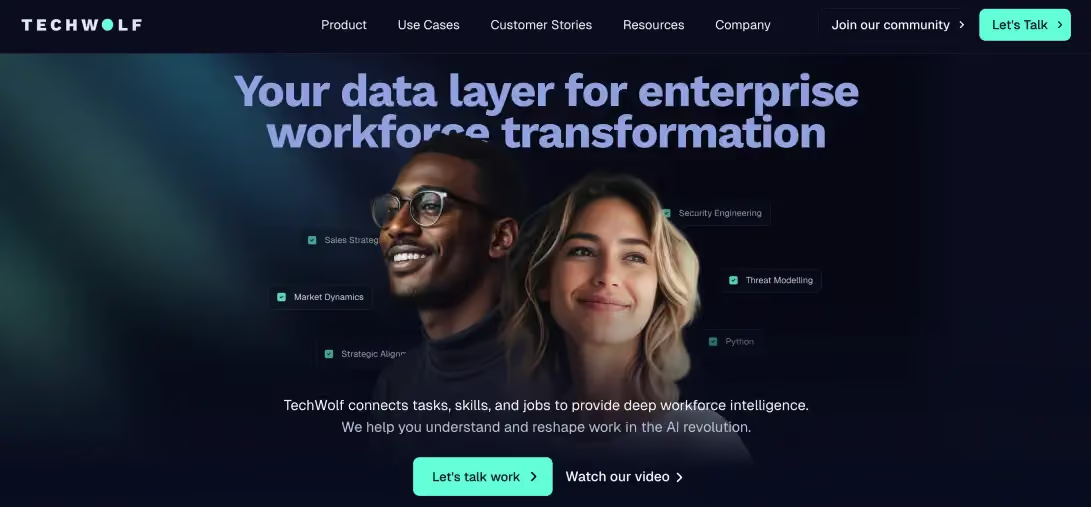
TechWolf is a Skills Intelligence platform built to infer real employee skills from everyday work data. It analyzes HR systems and project data with AI, rather than relying on static resumes or job titles. Skill profiles keep updating as roles and work evolve.
Key features:
- Skills inference: analyzes HR systems, project tools, and job descriptions to infer the skills employees genuinely use, rather than what's simply listed on a resume
- Dynamic skill profiles: continuously updates each employee's and role's skill profile as work evolves, instead of relying on a one-time, static assessment
- Skills mapping: maps inferred skills against role requirements and business needs to surface both matches and gaps across the workforce
- Skill gap prediction: analyzes trends in inferred skills data to help planners anticipate future skill needs before they become urgent
- Third-party integration: connects directly with systems including Workday, Degreed, and Oracle so skill data stays current across the broader HR stack
G2 rating: NA
3. Reejig
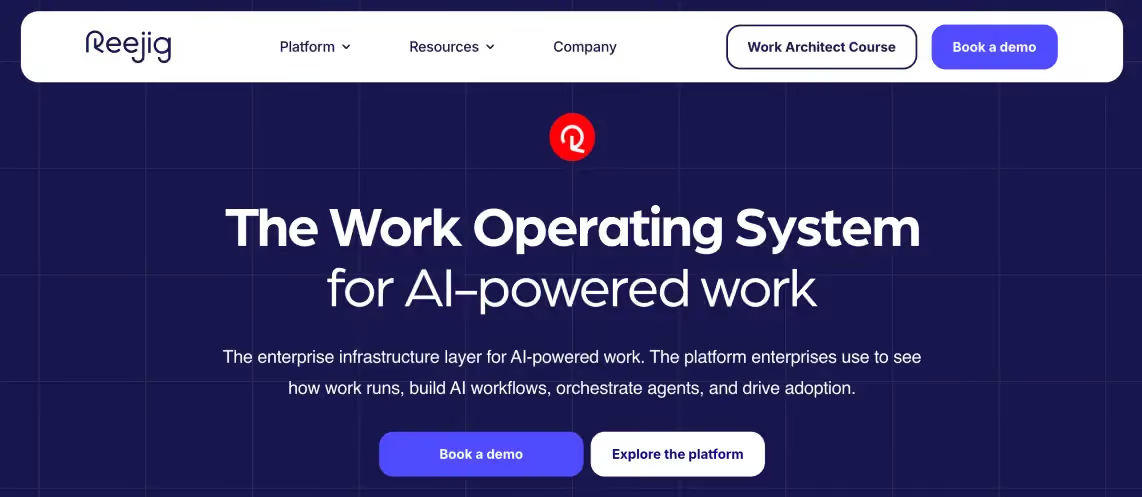
Reejig positions itself today as a Work Operating System for AI-powered work. Its focus is work architecture, task and job design, and orchestrating AI agents alongside human workers. That view of work updates continuously as roles shift.
Key features:
- Work Architecture: builds and maintains a live, continuously updated foundation mapping every job to its underlying tasks and required skills
- Work Impacts: shows leaders which specific jobs and tasks are shifting because of AI, and roughly when those shifts are expected to land
- AI orchestration: coordinates AI agents and human workers on a single system, so both can be tracked and managed together rather than separately
- Live role redesign: flags specific roles that need re-engineering as work changes, instead of waiting for the next annual planning cycle
- HRIS synchronization: automatically syncs updates to and from Workday, SuccessFactors, Oracle HCM, and SAP without manual data reconciliation
G2 rating: 3.5/5 (11 reviews)
4. Lightcast
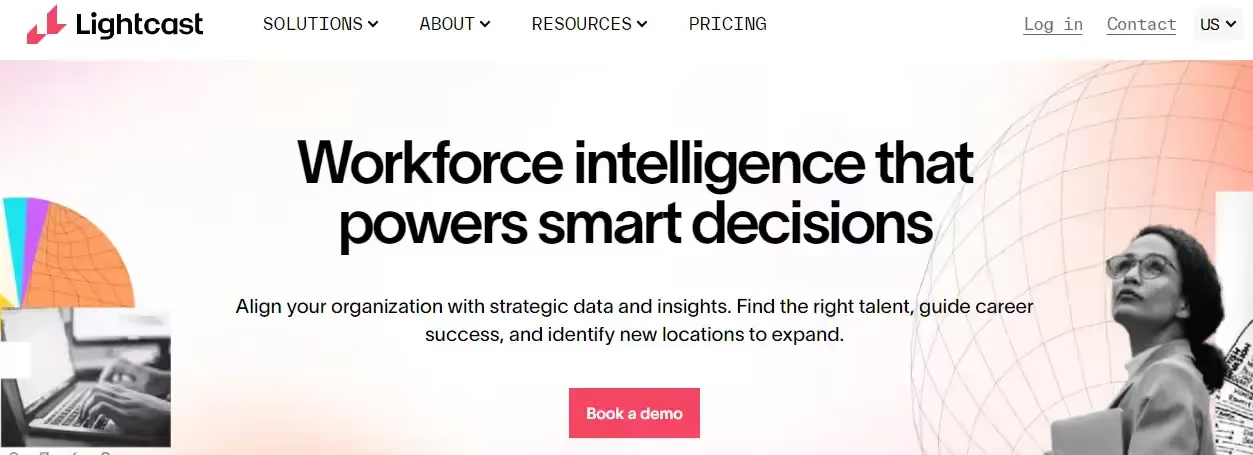
Lightcast builds its view of work from external labor-market data rather than internal task records. It maps skills, tasks, and occupations into a shared taxonomy for comparing roles across industries and regions. That taxonomy powers job architecture updates and market-level AI exposure assessments.
Key features:
- Occupation taxonomy: maintains the Lightcast Occupation Taxonomy, a standardized language for comparing job roles across companies, industries, and countries
- Job architecture modernization: updates internal job architecture using current, external market definitions of occupations, tasks, and required skills
- AI exposure assessment: evaluates how exposed entire occupations are to AI disruption, based on market-wide labor data rather than internal task records
- Labor-market benchmarking: aligns hiring, development, and workforce planning decisions with real-time shifts happening in the external labor market
- Global labor-market data: draws on billions of job postings and skills data points collected continuously across industries and regions worldwide
G2 rating: 4.6/5 (30 reviews)
5. Orgvue
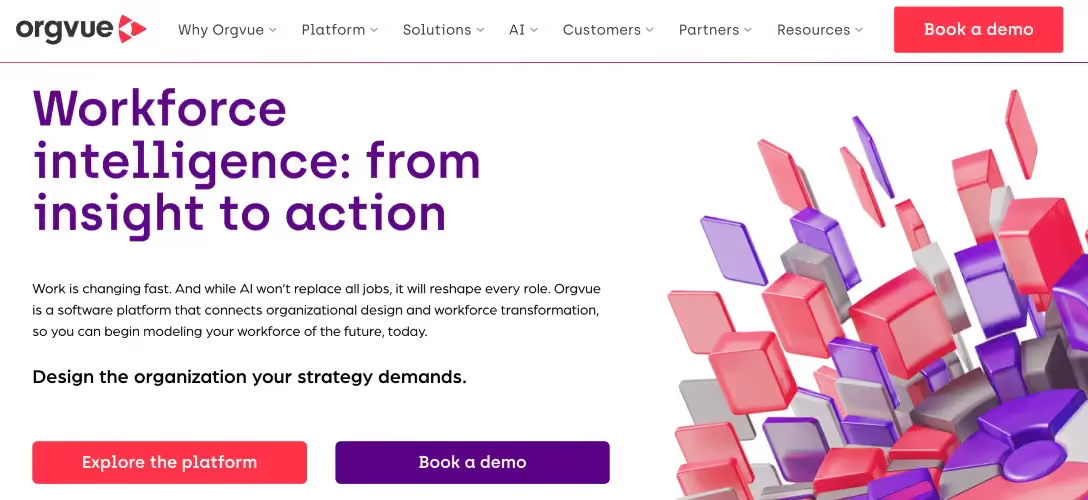
Orgvue is an organizational design and workforce planning platform. It consolidates HR, finance, and skills data into a single organizational model. Teams use that model to simulate scenarios and compare current structure against future plans.
Key features:
- Data consolidation: merges HR, finance, and skills data from multiple source systems into a single, schemaless organizational view
- Scenario modeling: simulates multiple future-state organizational structures side by side, so leaders can compare cost, headcount, and capability trade-offs directly
- Job architecture support: underpins job architecture and strategic workforce planning work with one shared, structured view of roles across the business
- Stakeholder visualization: turns complex organizational data into visuals built specifically for executive and board-level conversations, not just analyst reports
- Activity analysis: analyzes how work is actually distributed across teams to identify efficiency gains and redesign opportunities
G2 rating: 4.4/5 (16 reviews)
6. TalentNeuron
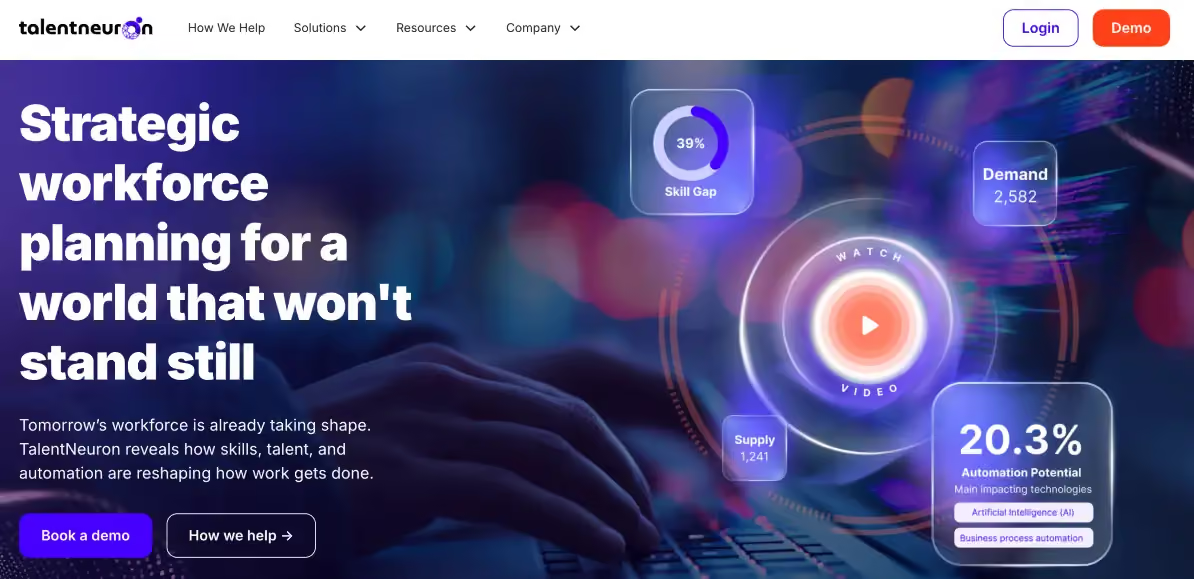
TalentNeuron combines internal workforce data with external labor-market intelligence in one view. It supports strategic workforce planning, automation-impact analysis, and organizational design. The result is workforce decisions grounded in both company data and market reality.
Key features:
- Labor-market intelligence: combines talent supply, demand, cost, and skills data across regions into one continuously updated view
- Strategic workforce planning: forecasts talent needs and models future workforce scenarios using both internal data and external market signals
- Automation impact analysis: identifies which specific roles are most at risk of automation, based on combined market and internal data
- Organizational design: embeds external labor-market intelligence directly into structural planning scenarios, rather than relying on internal headcount data alone
- Skills and job architecture: standardizes roles across the organization based on responsibilities, required skills, and qualifications
G2 rating: NA
7. Draup
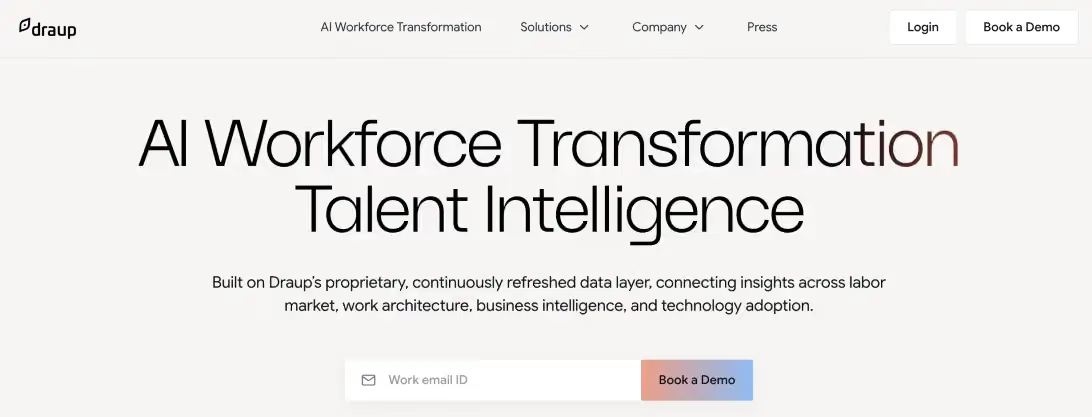
Draup for Talent is a labor-market and talent intelligence platform built for workforce planning at scale. It supports reskilling and location analysis using continuously updated market data. Its Etter module goes further, modeling how AI may change specific roles at the task level.
Key features:
- Predictive skills architecture: forecasts how roles and required skill mixes will evolve over time, based on combined market and internal signals
- Work redesign modeling: assesses task-level AI exposure through its Etter agent, identifying which specific tasks are likely to change first
- Peer benchmarking: compares workforce mix, cost, and skill intensity directly against named industry peers and competitors
- Continuous labor-market data: refreshes talent, cost, and skills data regularly from a large, multi-source data network
- HRIS and HCM integration: connects natively with systems including Workday and SAP SuccessFactors to enrich internal data with live market intelligence
G2 rating: 4.8/5 (11 reviews)
8. Cornerstone OnDemand
Cornerstone OnDemand's Workforce AI is a workforce-readiness intelligence platform. It combines the Cornerstone People Graph and Skills Engine into a single inference layer. The goal is targeted learning and surfacing talent that would otherwise stay hidden.
Key features:
- People Graph and Skills Engine: combines both into a single inference layer that powers every workforce decision made on the platform
- Labor-market signal integration: draws on internal workforce data, external labor-market intelligence, and a documented skills taxonomy of more than 55,000 skills
- Targeted learning: directs specific learning content to close identified skill gaps and surface previously hidden internal talent
- Open platform delivery: designed to integrate with existing enterprise systems and systems of record, rather than replacing them outright
- AI governance: built with certified AI guardrails intended to support enterprise-scale, regulated deployment environments
G2 rating: 4.1/5 (530 reviews)
9. Gloat
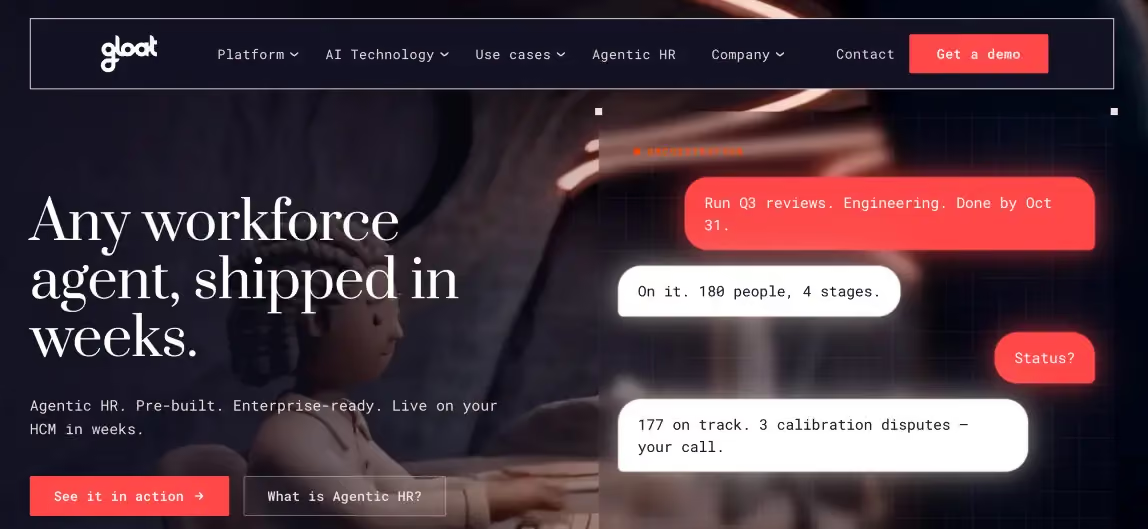
Gloat is a Talent Marketplace platform built around internal mobility and career development. It matches employees to projects, roles, and mentors using AI-driven skills matching. The focus is helping enterprises redeploy talent they already have.
Key features:
- Talent Marketplace: connects employees directly to internal projects, gigs, and open roles based on their existing, documented skills
- Dynamic skill mapping: builds and continuously updates employee skills profiles from internal data to power ongoing, real-time matching
- Workforce analytics: surfaces skill gaps and workforce agility metrics that leaders can act on directly, rather than static headcount reports
- Recruiter tools: helps recruiters search internal talent pools, build talent pipelines, and prioritize the strongest internal matches for open roles
- HCM integrations: connects with systems including Workday, SAP SuccessFactors, and Oracle HCM to keep employee data current across the stack
G2 rating: 4.4/5 (34 reviews)
10. Eightfold AI
Eightfold is a Talent Intelligence platform built primarily for hiring and internal mobility. It models skills, capability, and daily work signals across an enterprise using AI. That data powers matching between people and open opportunities, internal or external.
Key features:
- Skills-based matching: identifies candidates and employees based on demonstrated skills rather than keyword matches pulled from a resume
- Internal mobility: surfaces internal opportunities for employees based on their modeled skills and capabilities, not just their current job title
- Workforce planning: forecasts talent needs by combining enterprise workforce data with external labor-market signals
- Agentic AI recruiting: automates parts of candidate sourcing and evaluation using AI agents in place of fully manual screening
- Large talent dataset: draws on a large, cross-enterprise dataset of career and skills signals collected and refined over time
G2 rating: 4.2/5 (224 reviews)
Conclusion
"Work Intelligence" spans task-level AI analysis, labor-market data, organizational design, talent mobility, and skills data inference.
Match your actual business question to the right category before comparing vendors within it. That step narrows the shortlist faster than any feature comparison.
FAQs
1. What does "Work Intelligence" mean?
There is no single agreed definition. Vendors use it for task-level AI-impact analysis, labor-market and occupation data, or loosely for skills and talent mobility features.
2. How is Work Intelligence different from Skills Intelligence?
Work Intelligence examines the work itself, at the task level, and how AI may change it. Skills Intelligence examines workforce capability: which skills exist, who holds them, and where gaps sit.
3. Which type of Work Intelligence platform fits enterprise workforce planning?
It depends on the question. Task-level tools fit AI-readiness planning. Labor-market tools fit external benchmarking. Organizational design platforms fit restructuring and scenario modeling.
Do Work Intelligence platforms replace workforce planning software?
No. Task-level and labor-market Work Intelligence tools answer narrower questions than dedicated workforce planning platforms like Orgvue, which model org structure directly.