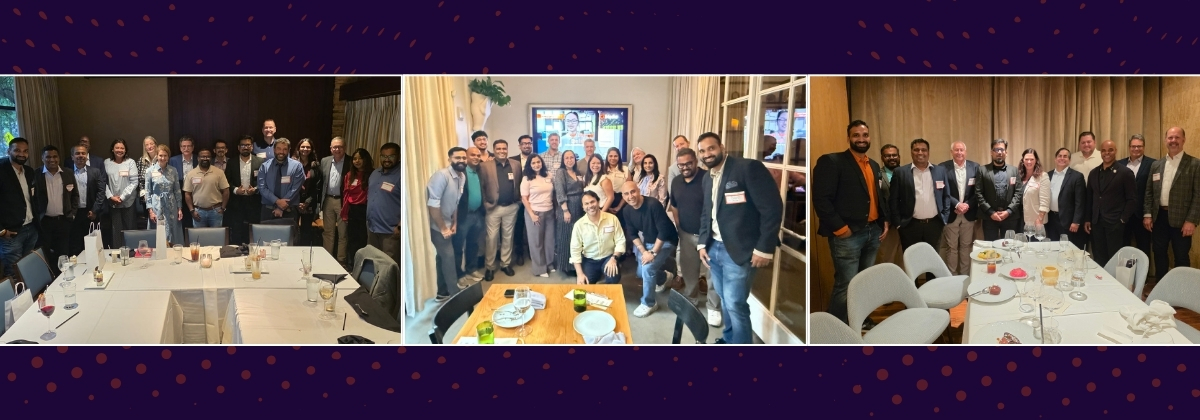
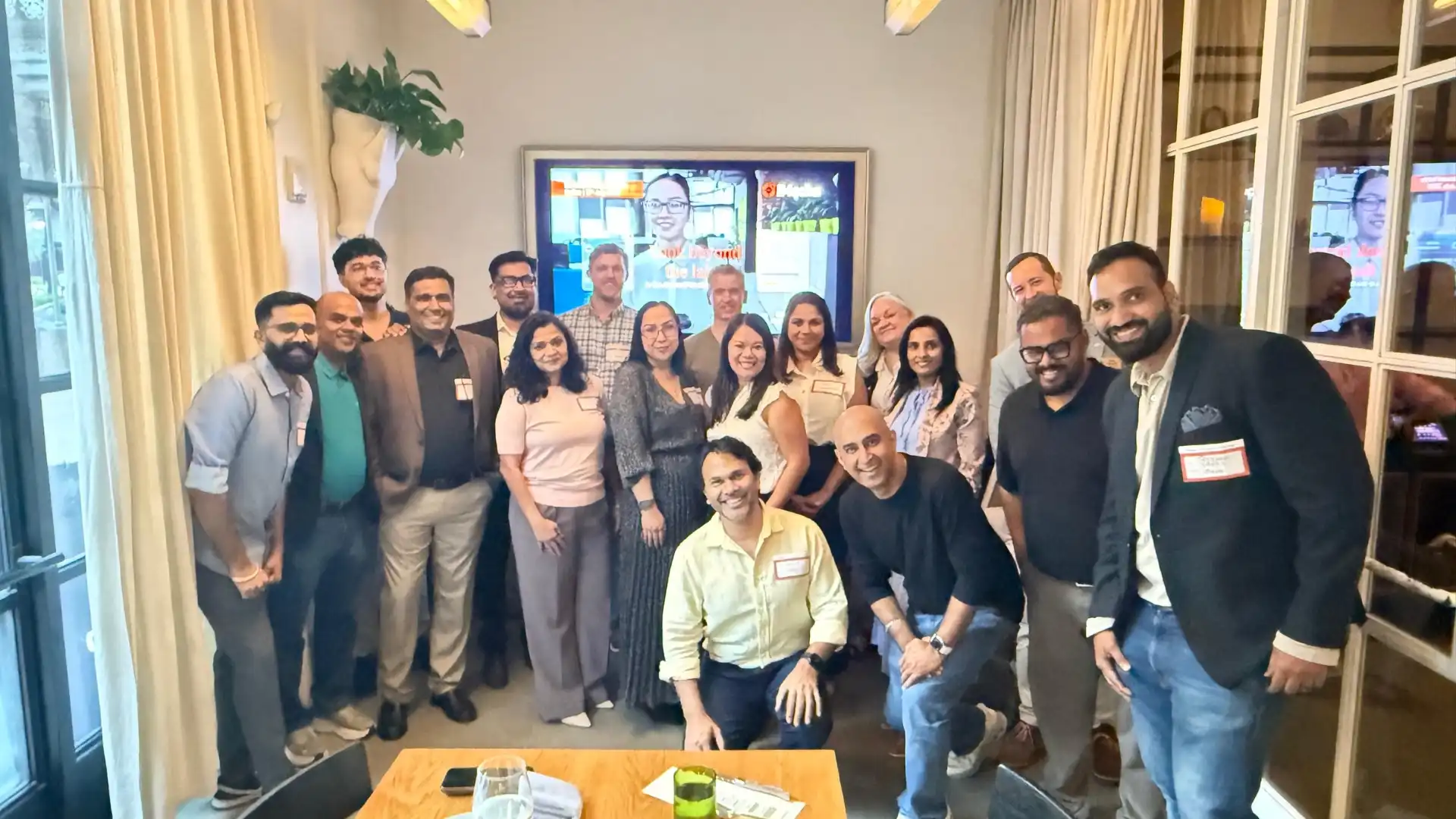
This July, iMocha hosted senior HR, Talent, and L&D leaders across three cities: Atlanta, Dallas, and Los Angeles, for the Look Beyond the Label Executive Roundtable Series. Each stop brought together CHROs, Chief People Officers, and workforce leaders for one invite-only evening of candid conversation on a question every organization is now asking in some form: what does it actually take to see, measure, and act on workforce capability in the AI era?
As iMocha's CEO Amit Mishra framed it while opening the series, the answer has been evolving for years: "Five, 10 years back, it was resumes, then it becomes titles, and now becoming skills." Each city brought a different fireside guest and a different set of priorities to the table. Here's what came out of all three.
Atlanta: Skills Are Becoming the New Currency
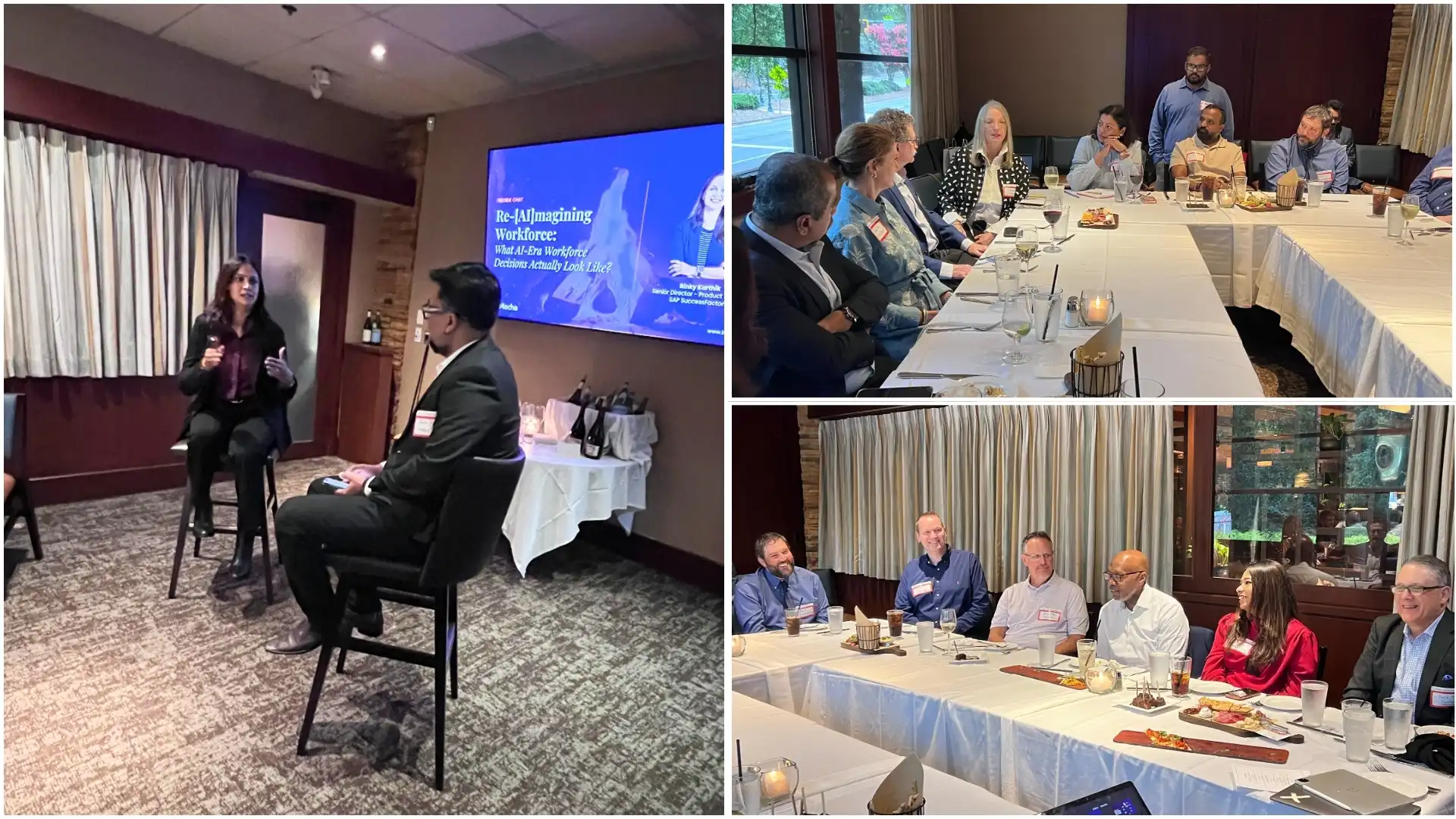
Atlanta opened with a fireside conversation between Karn Singh and Rinky Karthik, Sr. Director of Product Success at SAP SuccessFactors. Rinky's starting point was a shift she's watched play out across enterprises: workforce decisions used to be periodic, an annual review, a yearly engagement survey, and are increasingly becoming continuous and forward-looking instead.
That shift changes the question CHROs are actually solving for:
"A CHRO isn't asking who should be promoted... but rather, what is my top skills gap, and how can I fulfill the gap. That's a different question, and it needs a different kind of data than performance reviews were ever built to provide."
Rinky also shared the language she uses to describe skills' growing weight in the business:
"Skills is the new currency. What revenue is for CFOs, skills is for CHROs now."
She was upfront that she stays "politely skeptical" whenever a company claims to be AI-ready, and checks three things before she believes it: whether skills and job data live in one place or are scattered across spreadsheets and "somebody's memory," whether ownership of AI-driven decisions is clearly assigned across HR, IT, business, and compliance, and, most important, how managers actually behave day to day. Her point: AI readiness doesn't live in a tool. It lives at the front line, with the manager. If a manager still defaults to gut feel or office politics over what the data shows, the organization isn't AI-ready yet, no matter what's been purchased.
On reskilling, she was equally direct: it only works if the organization is transparent. Employees need to see their own skills portfolio and a real path forward, not just have that visibility sit with managers and HR, and that transparency needs to be paired with action, or the exercise falls flat. She grounded this in the experience of a Leading US Airlines, which began a skills-based transformation in 2022 after finding it difficult to bring furloughed staff back into new roles post-pandemic. With average employee tenure around 20 years at that airline, retention and internal mobility mattered more than external hiring. One of the earliest wins was a back-office project manager who had no idea what other opportunities existed inside the company until the skills program surfaced an internal match.
Dallas: Building Skills Data the Business Can Trust
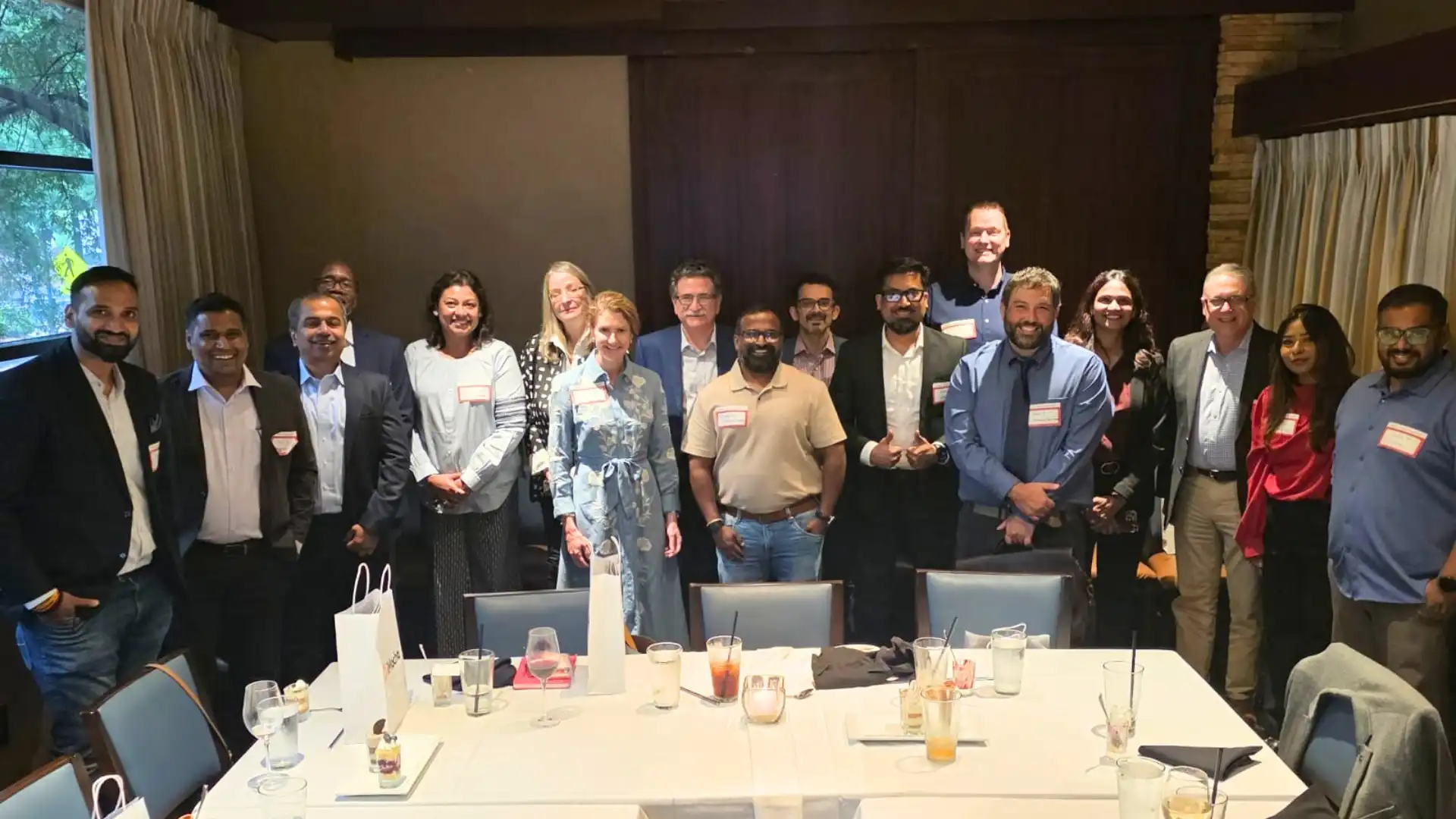
Dallas opened with a shared observation from Amit Mishra and Karn Singh: skills are becoming outdated faster than organizations can redesign roles around them, and experience alone no longer tells the full story. The room reflected that reality, with leaders from several leading enterprises, most of them already leading an AI transformation, a skills initiative, or a job architecture redesign of their own.
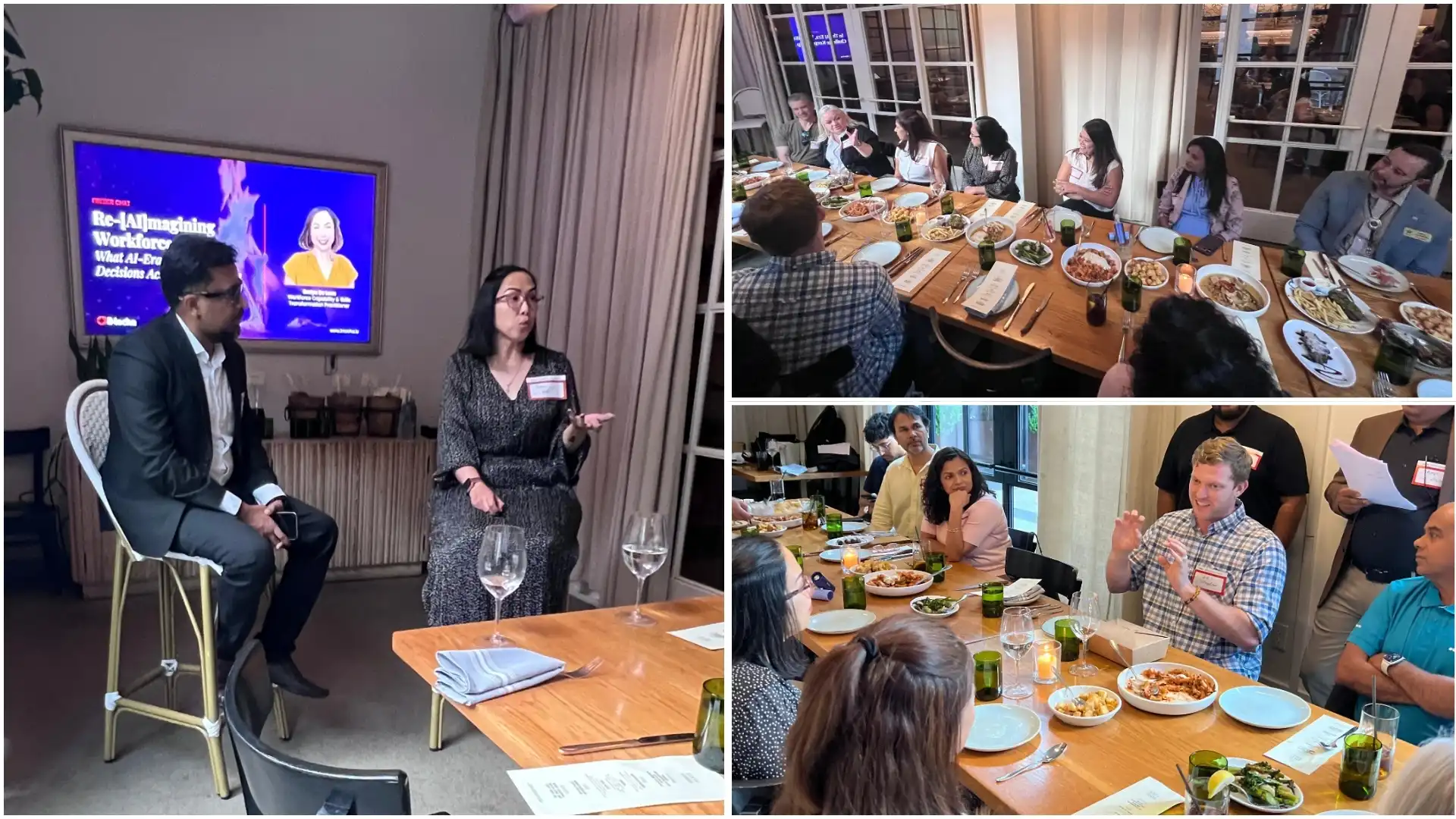
The centerpiece was a fireside chat with Emlyn De Leon, Workforce Capability & Skills Transformation Practitioner, whose insights sparked most of the questions and discussion that followed. When the conversation turned to the biggest obstacle to AI implementation, her response immediately resonated across the room:
"Everyone buys AI tools before understanding what business problem they are solving."
Drawing on her practitioner experience, Emlyn offered an equally direct assessment of organizational AI readiness:
"The technology exists. The people and AI literacy are the remaining challenge, and that's usually what decides how fast the rest of the transformation actually moves."
The open discussion that followed moved into the practical mechanics leaders are working through: building and maintaining a single global skills taxonomy across multiple languages and business units without allowing it to splinter into thousands of duplicate entries; consolidating the skills architecture of a dozen acquired companies into one system; and validating skills through multiple sources, including self-ratings, manager input, 360-degree feedback, certifications, and real work history, rather than relying on any one source alone. Several leaders also agreed that mapping tasks before mapping skills tends to provide a more accurate view of what a role requires day to day.
When the conversation turned to which skills will continue to matter over the next five, ten, or fifteen years, the room converged on a short list: critical thinking, pattern recognition, interpersonal skills, and relationship building. The group described these as durable capabilities that will remain relevant regardless of how quickly technology shifts. The strongest point of agreement in Dallas, however, was not about any single skill. Building the platform is the easier part. The real work is creating skills data that is trusted, validated, and current enough for the business to use with confidence.
Los Angeles: Rethinking How Organizations Define Value
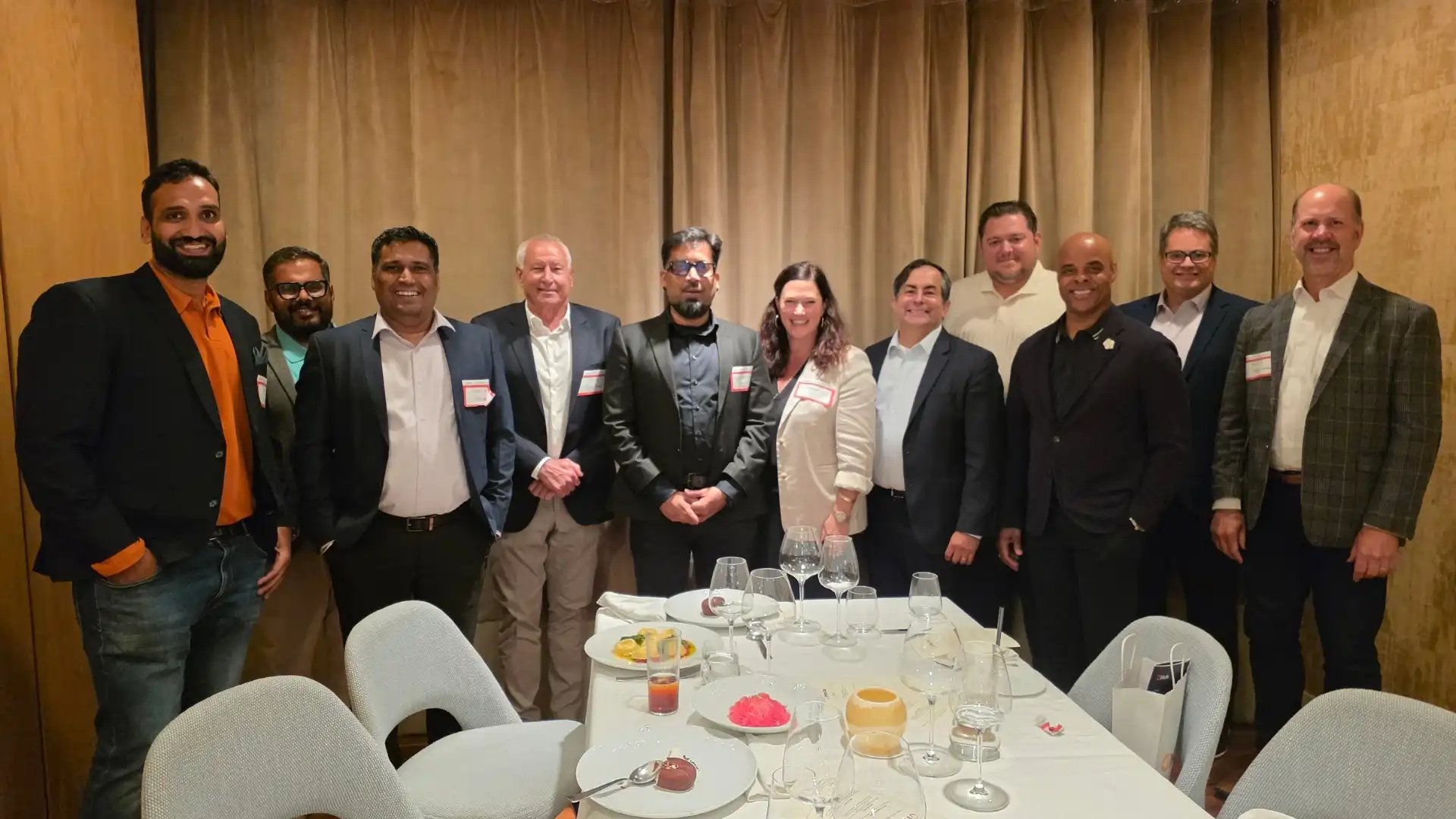
LA closed the series with a different format. Attendees wrote down, by hand, the one workforce priority keeping them up at night, then marked where their own organization sits on its skills journey, from not yet started to fully mature. The room included leaders from CAA, Amgen, Pyramid Consulting, and Cognizant, among others, and the fireside centerpiece was a conversation with Brian J Miller, Founder of Win With Talent and former Chief Talent, D&I Officer at Levi Strauss & Co.
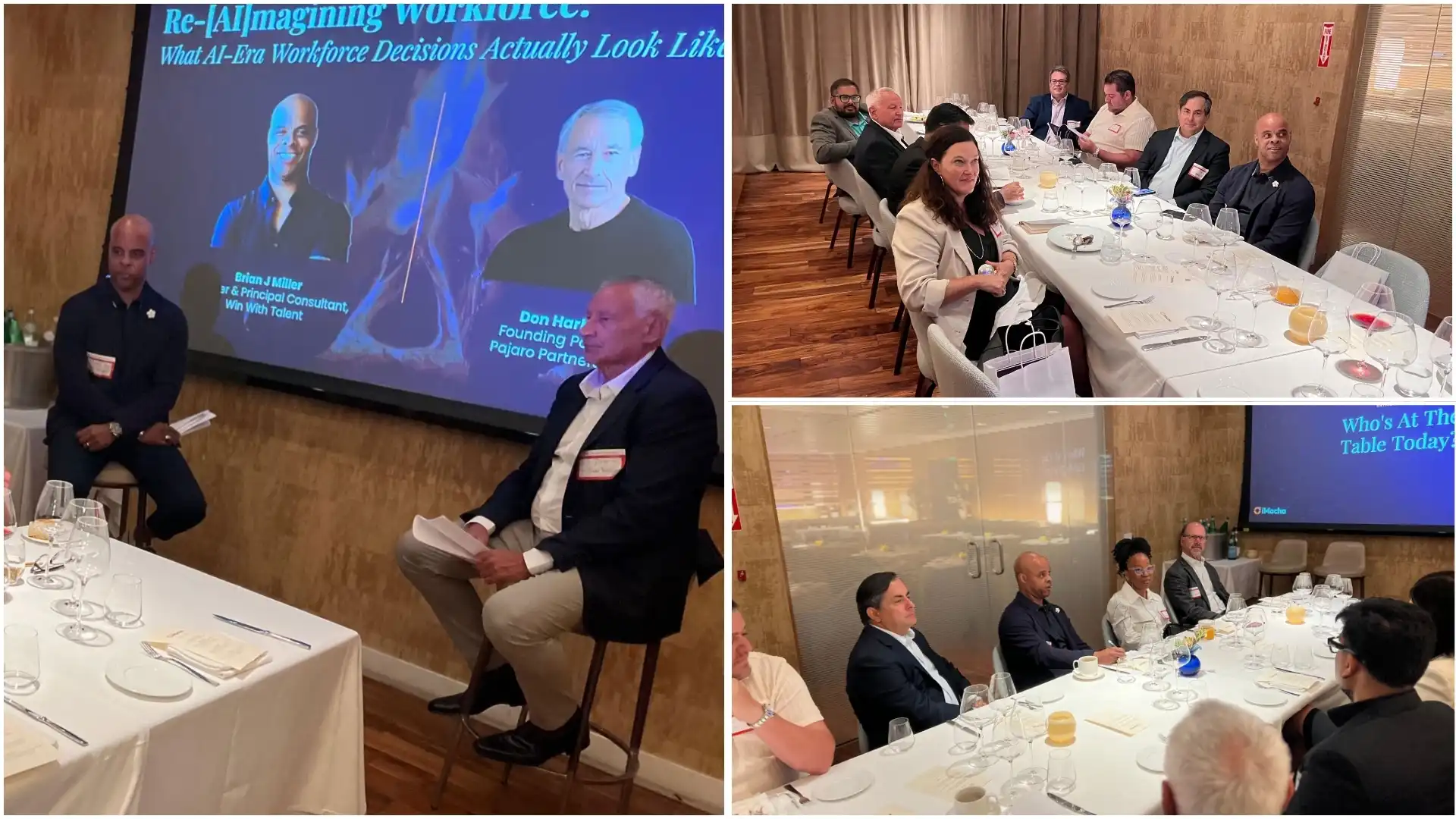
Brian opened with a pattern he sees in nearly every boardroom right now. Companies write an AI use policy first, then move to an upskilling question. Only later, once the board starts asking harder questions, do they dig into what actually drives the decision:
"What's the return? What's the innovation? What's the value creation?"
He walked through how a few companies have tried to answer that. As a talent executive across retail, tech, and biotech, he gave examples of a job evaluation framework, classifying roles as automate, redesign, augment, or preserve. His read on AI's public image right now was just as sharp:
"If AI was a company, it would have a serious branding issue right now."
Much of the conversation pushed HR to rethink how it operates day to day. One of Brian's provocations in the room made the case for a product-led mindset over a process-and-policy one:
"If employees had a choice to use our processes and services, would they?"
It's the question Chief Product Officers lead with, he said, and one HR rarely asks about itself. Product creation, he argued, is the engine that will define HR's future.
He also reframed a common board-level metric: revenue per employee. It's easy to manage, and just as easy to mismanage by simply reducing headcount. His alternative: map roles to strategic initiatives, then flag the ones that are revenue-generating, value-protecting, and silo-spanning before deciding where AI investment should actually go.
On what makes a good talent bet, his synthesis was DRS: Depth, Range, and Scale.
Agentic Talent and Leadership will be grounded in experience as much as skill.
Two examples from the iMocha team stood out as concrete proof points. One organization mapped every job into tasks, skills, and proficiencies, plotted them by AI-applicability and business impact, and deliberately started with a lower-impact, high-AI-applicability process, insurance claims handling, before touching anything closer to core revenue. Another used HR and work data to map skill-based career paths for every employee, starting with a pilot of 8,000 and scaling toward 90,000. The key design choice: the tool wasn't shown directly to employees. It went to managers, with a mandate to walk every direct report through their personalized path each quarter. Employee NPS rose measurably within two quarters, with direct feedback that "managers are caring for us, they are working for us."
More Voices From the Room
The fireside guests set the agenda, but the open discussions that followed in each city carried just as much of the conversation. Several leaders pushed into the harder mechanics of getting skills data right, including calibrating manager ratings against employee self-assessments, keeping a taxonomy from ballooning into thousands of overlapping entries, and reconciling systems across teams that joined through acquisition and never shared a common structure to begin with.
One leader reframed reskilling entirely, arguing that the more pressing development need isn't teaching people to use AI, but teaching people to be better managers, since coaching, empathy, and judgment are the things AI still can't replicate.
Another challenged the idea that AI adoption has to be either top-down or grassroots, making the case that senior leadership needs to set the strategic guardrails first and then let innovation build from within teams.
A few leaders brought hard data into the room as well, including internal survey results showing that learning and growth, not compensation, was the top priority for early-career talent by a wide margin. And leaders from more heavily regulated industries pointed out that applying AI to hiring is its own compliance exercise in every region, with rules shifting quickly enough that a global rollout has to be handled market by market rather than as one policy. Taken together, these were the perspectives that gave each roundtable its texture, proof that the value in the room went well beyond the fireside chat.
What Tied the Three Conversations Together
Across all three cities, one pattern kept resurfacing: many organizations invest in AI tools well before they've defined the business problem those tools are meant to solve. From there, each city arrived at a similar place. Skills validation works best when it combines several sources of evidence rather than resting on one, taxonomies need to hold up across languages, systems, and M&A activity, and durable human skills like critical thinking, pattern recognition, and relationship-building matter more, not less, as the technology moves faster.
As Amit Mishra put it once the series wrapped: "The label on a resume has never told the whole story, and in an AI-driven economy, relying on it is no longer good enough. What struck me across Atlanta, Dallas, and Los Angeles was how consistent that gap is, regardless of industry or company size. Every leader in the room is trying to answer the same question: how do we know, with confidence, what our workforce can actually do?"
That's the question "Look Beyond the Label" was built to explore, and across three cities of candid conversation, every leader in the room left with a clearer view of what to build next.
Read iMocha's official press release on the series here.